If you’re trying to figure out how to learn to sew, the honest answer is that the method matters less than actually starting. You can learn from a patient teacher standing over your shoulder, from a video you pause and rewind ten times, or from a library book propped open next to your machine. All three work. What trips people up isn’t picking the “wrong” way to learn, it’s picking no way at all and just winging it with a machine they’ve never threaded before.
That said, a few structured hours at the start really do save you weeks of frustration later. This guide walks through the three main routes, sewing classes near you, paid online platforms, and free self-teaching, so you can pick the one that fits your budget, your schedule, and how you actually learn best. If you haven’t read our full roadmap yet, start with the beginner roadmap for the bigger picture, then come back here to figure out how you’ll get there.
Some links below are affiliate links. Prices are 2025-2026 estimates and change often, so always check current pricing.
The Three Ways to Learn to Sew
Each route trades off cost, speed of feedback, and how much self-discipline it demands. Here’s how they stack up side by side.
| Route | Typical cost | Feedback | Best for |
|---|---|---|---|
| In-person class | $20-60/session (group) | Immediate, hands-on correction | Hands-on learners, anyone who keeps getting stuck at the same step |
| Online platform | $8-15/month | Rewatchable videos, no live correction | Self-paced learners who are disciplined and learn well from video |
| Free self-taught | $0 | None built in, you have to seek it out | Tight budgets, high self-discipline |
In-Person Sewing Classes
For years, the default advice for finding a beginner sewing class was simple: check your local JOANN. That advice no longer works. JOANN filed for Chapter 11 bankruptcy for the second time in 15 months in January 2025, and after failing to find a buyer for its roughly 800 remaining stores, the company announced full liquidation in late February 2025. The last locations closed by May 30, 2025. JOANN’s assets were sold at auction to the private equity firm GA Group, and craft retailer Michaels separately acquired JOANN’s intellectual property and private-label brands, but not the physical stores or their class programs. There are no JOANN in-store classes left anywhere in the country.
The learners who used to default to JOANN haven’t stopped taking classes, they’ve just moved. Independent shops and sewing machine dealers have picked up much of that demand, and several report increased beginner enrollment since JOANN’s stores closed for good. Here’s where beginner sewing classes are actually happening now:
- Independent fabric and quilt shops. Many run beginner series and have absorbed a good chunk of the demand since JOANN closed.
- Sewing machine dealers (BERNINA, Brother, Janome, Bernette authorized dealers). Often free “new owner” classes if you bought the machine there, paid beginner series if you didn’t.
- Community colleges and adult or continuing-education programs. Typically the cheapest structured multi-week option you’ll find.
- Parks and recreation departments and community centers.
- Public libraries and makerspaces. Increasingly common, sometimes free or donation-based.
- Sewing studios and schools, more common in larger cities.
- Meetups, Facebook groups, and community bulletin boards.
- Hobby Lobby. It has an online class locator and a “Register” flow on its site, but in-store instructor-led sewing classes vary enormously by location, and several stores currently list them as paused or intermittent. Call ahead before you count on one.
- Michaels. No standing in-store sewing class program. It runs occasional special events, like the annual “Teach the World to Sew Day” tote-bag event, and offers live-online and on-demand video classes through its own website rather than local instructor-led sewing classes.
To find what’s actually available near you, search “[your city] + beginner sewing class” and also check Eventbrite and ClassPass. Both list independent-shop and studio classes that don’t always show up in a plain Google search. Shortlist three to five options, look at each one’s syllabus, photos, and reviews, then call the shop directly to confirm the class is still running before you pay for it.
Before you enroll anywhere, run through this quick checklist:
- Does the listing show a beginner syllabus with a make-and-take project, not just a vague “learn to sew” title?
- Is class size capped around 8-10 students so you actually get one-on-one help?
- Are sewing machines provided, or do you need to bring your own?
- What is the total cost including materials, kit, or studio fees, not just the advertised session price?
- What is the cancellation and make-up policy if you miss a session?
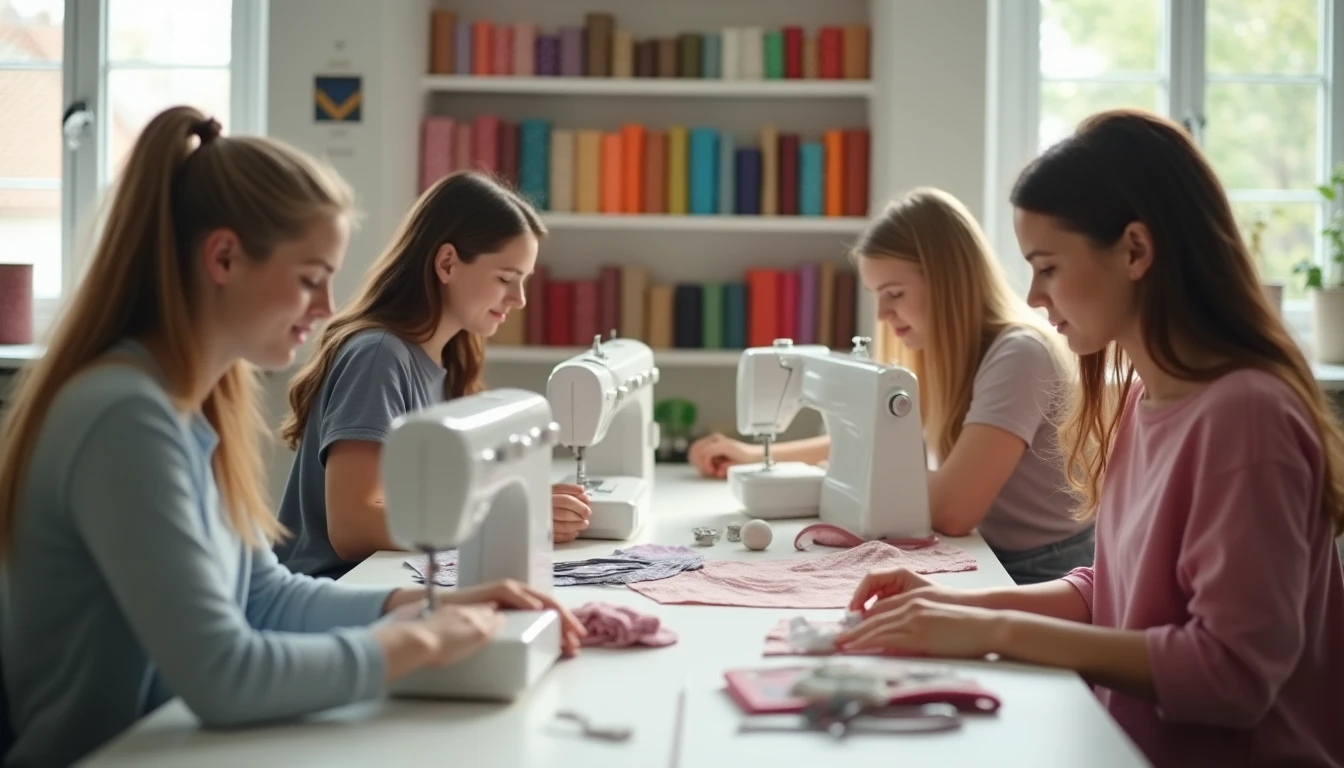
A typical first beginner class runs 2-3 hours. You’ll cover the parts of a sewing machine and how to thread it top and bottom, including winding and inserting a bobbin, then move on to sewing straight seams and turning corners cleanly. Most classes end with one simple project you take home the same day, commonly a pillowcase, a basic tote bag, or a zipper pouch. It’s a small win, but it’s a real one, and it’s usually enough to convince a nervous beginner that the machine isn’t going to bite.
Most first-timers walk in a little anxious about the machine jamming or the thread snapping in front of strangers. That’s normal, and it’s exactly why an instructor standing nearby is worth the price of admission. When your bobbin thread nests into a bird’s nest on the underside of your fabric, someone can show you in thirty seconds what would otherwise take an evening of frustrated googling to figure out on your own.
What Sewing Classes Cost
Costs vary quite a bit depending on format, so here’s a realistic breakdown.
| Format | Typical price | Notes |
|---|---|---|
| Group class | $20-60/session (avg ~$50-55/hr) | Most common entry point; per-person cost drops in larger groups, but you get less individual correction |
| Private lesson | $30-120/hr (avg ~$80/hr) | Fastest progress and fully customized pace; often includes use of the instructor’s machine and materials |
| Multi-week beginner course (4-8 weeks) | $100-450 | Community college courses run roughly $49-250; dealer or studio comprehensive courses run higher, up to around $400-450 including a supply/kit fee |
| Specialized class (quilting, garment construction, serger) | $100-400 | Priced above general beginner classes because of specialty equipment or techniques; dealer “basic sewing” comprehensive courses can run around $400 |
| Online subscription | $8-15/month | Creativebug and Seamwork sit in this band; Craftsy is nominally similar but frequently promo-priced far lower for new members, or sold as one-time class purchases |
| YouTube / free written guides | $0 | No cost, but no feedback, curriculum, or accountability |
Where you live matters too. A beginner class in a major city will usually run higher than the same class in a smaller town, so treat these numbers as a starting range rather than a fixed quote, and confirm actual pricing with the shop or program before you book.
The Best Online Sewing Classes
If a local class isn’t practical for your schedule or location, a paid online platform gives you structure without a drive across town. None of the links below are affiliate links, these are plain mentions so you can go compare current pricing yourself.
Craftsy has one of the largest sewing and quilting video libraries around, with individual classes available a la carte or a Premium membership listed around $123 a year. Here’s the honest part: Craftsy is very frequently promo-priced for new members, with deals as low as $0.75 to $1.79 for the first year showing up often. Those eye-catching cheap-year deals are new-member introductory offers, not the standing price, so check what you’ll actually be charged at renewal before assuming the discount holds.
Creativebug runs about $7.95-9.95 a month depending on tier (Unlimited vs. Unlimited Plus), with a free trial of roughly a week to a month depending on the current offer. It has a friendly, structured “Netflix for crafters” feel with vetted professional teachers, and many classes include downloadable patterns. It’s smaller and more curated than Craftsy or Skillshare, which is a plus if you want consistency and a minus if you want an exhaustive library.
Skillshare costs around $168 a year (about $13.99 a month effective) or roughly $32 a month billed monthly, with a free trial that’s usually 7 days and requires a card on file that auto-renews. Sewing is a small slice of a huge general creative platform where anyone can publish a class, so quality is inconsistent. Check instructor credentials and class reviews before you rely on one for fundamentals.
YouTube is free and genuinely excellent for one specific technique, like threading a serger, sewing a zipper, or fixing tension problems. What it doesn’t offer is a curriculum or anyone checking your form. Pick a single structured beginner playlist from one channel and follow it start to finish instead of hopping between videos from different creators.
Seamwork runs about $15-16 a month and is built around ongoing pattern downloads bundled with monthly sew-along classes and skills workshops. It’s a good fit if you’re garment-focused and want patterns as the main draw, with classes as a nice bonus rather than a full ground-up beginner curriculum.
Sew Over It’s Stitch School prices its Basic tier around £5 a month and Premium around £15 a month, with a 3-month minimum commitment. It leans toward garment-construction learners, especially in the UK, though the locked-in minimum makes it less flexible to cancel than the month-to-month US platforms.
Learning for Free (the Right Way)
Going fully free doesn’t mean going in without a plan. The learners who succeed with self-teaching tend to follow the same basic method:
- Pick ONE structured beginner video series or playlist from a single teacher, and follow it start to finish in order, rather than jumping between random videos.
- Practice each new skill, threading, straight seams, corners, hems, on fabric scraps before you attempt it on your actual project.
- Use written step-by-step guides as your “textbook” alongside the videos, for steps that are easier to follow in still images than in real time. Our own written guide to using a sewing machine and sewing techniques library work well for exactly this.
- Finish one small complete project before moving on to the next skill, so your confidence builds in order instead of scattering across half-finished attempts.
The risk of going fully free isn’t the cost, it’s that nobody catches your bad habits early. Uneven seam allowances, a poorly threaded machine, or tension problems can get baked in before you even notice them. A single paid class, a sewing friend who can look at your work, or posting progress photos to r/sewing for feedback largely closes this gap without paying for an ongoing subscription.
A few resources worth bookmarking:
- YouTube channels: Professor Pincushion (machine setup and technique fundamentals), Made to Sew (step-by-step beginner tutorials), Evelyn Wood / Vintage Sewing School (foundational technique breakdowns)
- Public library books on beginner sewing and pattern reading
- Free beginner patterns from indie pattern designers and sewing blogs
- r/sewing on Reddit for troubleshooting and project feedback
How to Choose Your Route
If none of the above has made the decision obvious yet, here’s a simple way to sort it out:
- You’re a hands-on learner, or you keep getting stuck at the same step when you try to teach yourself. Book a local in-person class. Real-time correction fixes problems in minutes that self-teaching can leave unresolved for weeks.
- You learn well from video, want to go at your own pace, and can stay disciplined without a deadline. A paid online platform (Creativebug, Craftsy, Seamwork) gives you structure and rewatchable lessons for a low monthly cost.
- You’re on a tight budget and can hold yourself accountable to following a plan. Go fully free with YouTube, written guides, and r/sewing. It costs nothing, but it requires the most self-discipline of the three routes.
- You want the cheapest path but don’t want bad habits to set in. Try a hybrid approach: start free, then book a single in-person or private class specifically when you hit a wall on tension, fit, or a technique you can’t self-correct.
What You Need Before Your First Class
Most beginner classes provide sewing machines, which is worth asking about ahead of time because it turns the class into a free “try before you buy” test drive. Using a few different provided machines before you commit to a purchase will help you make a much better buying decision afterward, and it’s worth reading our sewing machine buying guide once you’re ready to shop for real. Avoid buying your own machine before the class if you can help it.
Beyond the machine, most classes expect you to bring your own basic kit, things like fabric shears, pins, a seam ripper, and measuring tape. Our guide to sewing tools and notions covers what belongs in a starter kit if you don’t already own one. Bring a notebook too, and check whatever supply list the class sends you ahead of time. Don’t assume everything beyond the machine itself is included, and don’t be the person who shows up with an empty tote bag and has to borrow a seam ripper the whole session.
Whichever route you end up choosing, you’ll need actual projects to practice on once the lesson ends. Our library of 155+ printable PDF sewing patterns, each with step-by-step instructions, is built to work alongside any class, course, or self-taught plan.
Frequently Asked Questions
How much do sewing classes cost?
Group classes typically run $20-60 per session (averaging around $50-55/hr), private lessons run $30-120/hr (averaging around $80/hr), and multi-week beginner courses run roughly $100-450 depending on the provider and city.
Are sewing classes worth it?
For hands-on learners, or anyone who keeps stalling out teaching themselves, yes. Real-time correction from an instructor fixes habits like bad tension or wrong seam allowances far faster than trial and error. If you’re disciplined and learn well from video, a paid online platform or free YouTube can get you just as far for less money.
Can I learn to sew online for free?
Yes. Follow one structured YouTube beginner series in order, practice each skill on scraps first, and use r/sewing or a sewing friend for feedback so bad habits don’t go uncorrected.
What happens at a beginner sewing class?
A typical first class runs 2-3 hours and covers threading the machine and bobbin, sewing straight seams and turning corners, and finishing a simple take-home project like a pillowcase, tote bag, or zipper pouch.
How do I find sewing classes near me?
Search “[your city] + beginner sewing class,” and also check Eventbrite and ClassPass. Independent fabric shops, sewing machine dealers, community colleges, parks and recreation departments, and libraries are the main venues since JOANN closed all its stores in 2025.
How long does it take to learn to sew in a class?
A single 2-3 hour class teaches the fundamentals and one finished project. A 4-8 week multi-week course builds real competence across multiple techniques and projects.
Do I need my own sewing machine for a class?
Usually no. Most beginner classes provide machines, which is a good reason to hold off buying one until you’ve tried a few models in class.
What is the best online sewing class?
There isn’t one universal answer. Creativebug suits beginners who want structured, vetted lessons for about $8-10 a month. Craftsy suits those chasing a large library, especially during promo pricing. Seamwork suits garment sewists who also want pattern access. YouTube is the free option if you follow one series in order.