
Stand in front of a fabric wall for the first time and it can feel like everyone else got a manual you never received. Bolts stacked ten deep, tags full of words like “poplin” and “GSM,” and a quiet fear that you’ll pick wrong and waste money and a whole afternoon. Here’s the good news: choosing fabric for sewing is a lot less mysterious once you know what you’re actually looking at.
Every fabric, no matter how exotic the name on the bolt, comes down to three things: what it’s made of (fiber), how it’s constructed (woven, knit, or nonwoven), and how heavy it is (weight). Learn those three variables and you can walk up to almost any bolt and make a reasonable guess about how it will behave under your needle.
This guide covers fibers, the woven-versus-knit divide, the fabrics you’ll meet most often, how to pick the right one for a pattern, and how to prep and sew each type. New to sewing itself? Start with our beginner’s roadmap first, then come back here when you’re ready to shop for fabric.
Some links below are affiliate links. Prices are 2025-2026 estimates and change often, so always check current pricing.
Fibers: What Fabric Is Made Of
Fiber is the raw material a fabric is spun from, and it’s the biggest single thing that determines how a fabric feels, breathes, and behaves at the ironing board. Fibers generally fall into three camps: natural (grown from a plant or animal, like cotton, linen, wool, and silk), synthetic (manufactured from petroleum chemistry, like polyester, nylon, and spandex), and blends, which mix two or more fibers to borrow the best traits of each.
There’s also a middle category worth knowing: semi-synthetic fibers like rayon and viscose. These start from a natural source (wood pulp) but go through heavy chemical processing, which is why rayon drapes like silk yet needs to be handled more like a synthetic when you’re cutting and washing it.
One fiber almost never travels alone. Spandex (also called elastane) gives stretch wovens and knits their snap-back recovery, but it’s always blended into a base fiber, typically at 2 to 10 percent in stretch wovens and up to about 20 percent in some knits. You won’t buy “100% spandex” off the bolt.
| Fiber | Feels like | Strengths | Watch out |
|---|---|---|---|
| Cotton | Soft, matte, breathable, with a little natural texture | Versatile, easy to press and launder, holds a crease, cheap and widely available | Wrinkles easily; shrinks if not prewashed |
| Linen | Crisp, cool to the touch, slightly nubby with visible slubs | Breathable, strong for its weight, softens beautifully after repeated washing | Wrinkles heavily, frays a lot at cut edges, can shrink noticeably on first wash |
| Wool | Warm, springy, textured; can be soft (merino) or coarse depending on grade | Insulating, naturally wrinkle-resistant, drapes and tailors beautifully in suiting weights | Can felt and shrink permanently if washed with heat and agitation; some people find it itchy |
| Silk | Smooth, lustrous, cool and slippery to the touch | Exceptional drape and sheen, strong for how lightweight it is | Water-spots easily, fades in sunlight, slippery to cut and pin, often needs dry cleaning |
| Polyester | Smooth to slightly slick; less breathable against skin | Inexpensive, wrinkle-resistant, colorfast, durable, resists shrinking | Doesn’t breathe well, can pill with wear, melts under a too-hot iron |
| Nylon | Smooth, slightly slippery, lightweight | Very strong, abrasion-resistant, quick-drying | Melts or scorches under heat, prone to static, less common in apparel fashion fabric outside activewear and linings |
| Rayon / Viscose | Soft, fluid, silk-like drape | Breathable, drapes beautifully, takes dye vividly because it’s a regenerated cellulose fiber (wood pulp processed into fiber) | Shifts and slips while cutting, can shrink significantly in the wash, weak when wet so handle gently |
| Spandex / Elastane | Never used alone, felt only as the stretch and recovery it adds to a base fabric | Adds stretch and snap-back recovery to almost any woven or knit base fiber | Always blended, typically 2-10% in stretch wovens and up to about 20% in some knits; degrades with high heat or chlorine exposure |
| Poly-cotton (blend) | Soft like cotton but smoother and less prone to wrinkling | Combines cotton’s comfort with polyester’s wrinkle resistance and durability; usually cheaper than 100% cotton | Less breathable than pure cotton and can pill over time |
Woven vs Knit: The Split That Matters Most
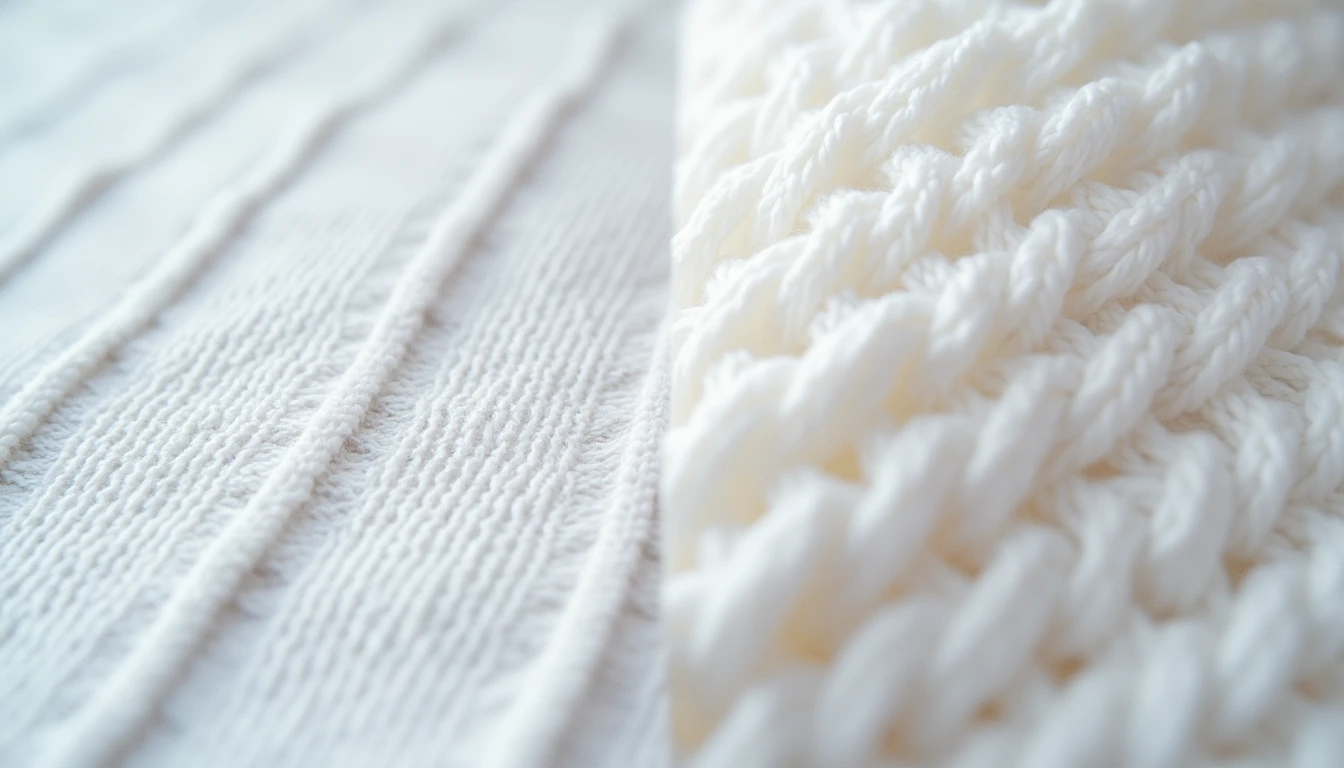
If fiber tells you what a fabric is made of, construction tells you how it behaves. This is the split that matters most when you’re picking fabric for a specific pattern, because a pattern drafted for one won’t work in the other.
Wovens are made by interlacing two sets of yarns, the warp (lengthwise) and the weft (crosswise), at right angles, over and under, like a basket. That interlacing makes wovens stable with very little stretch, and it’s why cut edges fray: once a thread is severed, nothing locks it in place anymore.
Knits are built differently. A single continuous yarn is looped into interlocking rows of stitches, the same idea as hand-knitting but done by machine. Those loops let knit fabric stretch and spring back, and are why a cut edge curls or runs instead of fraying (there’s no crossing thread to come loose).
Telling the two apart takes about five seconds. Stretch the fabric crosswise, side to side. If it gives noticeably and bounces back, it’s a knit. If it barely moves, it’s a woven. Up close, the difference shows visually too: wovens display a tidy grid of crossing threads, while knits show tiny V-shapes or chained loops running in rows.
Wovens suit structured, tailored projects (shirts, quilts, totes), while knits suit anything meant to stretch and move with the body (t-shirts, leggings, loungewear). One practical note for knits: they need a ballpoint or stretch needle and a stitch that flexes with the fabric, or you’ll end up with skipped stitches and popped seams. More on that below.
There’s a third family worth knowing: nonwovens, including felt, interfacing, and some battings. These are matted or bonded together rather than woven or knitted, so they don’t fray or ravel at all, which is exactly why they’re used for structure and stabilizing rather than for garments that need drape.
Common Weaves in 60 Seconds
Not every woven fabric is built the same way, and knowing the three basic weave structures makes bolt names like twill, satin, and poplin click into place.
Plain weave is the simplest: each weft thread passes over then under one warp thread, in a checkerboard pattern. That produces a crisp, stable, evenly balanced fabric that’s easy to cut and sew accurately. Quilting cotton, poplin, and muslin (also called broadcloth) are all plain weaves.
Twill weave floats the weft thread over two or more warp threads before going under, creating the visible diagonal ribs you can see and feel on denim, chino, and gabardine. It’s more durable than plain weave, drapes a bit better, and hides dirt and wrinkles well, which is part of why it’s the go-to for jeans and workwear.
Satin weave goes further still: long floats, where the yarn crosses four or more threads before interlacing, leave most of the surface uncut. That’s what gives satin its signature sheen and slippery hand, whether it’s charmeuse, satin-weave silk or polyester, or a lining fabric. The tradeoff is durability; those long floats snag and wear more easily than a tighter weave.
The Fabrics You’ll Actually Meet
Here’s a quick-reference tour of the fabrics you’ll run into most often, matched to what they’re best for.
Quilting cotton. A mid-weight, tightly woven 100% cotton in endless prints and solids, roughly 130 to 150 GSM (grams per square meter). Best for quilts, totes, first garments, and kids’ clothes; a true beginner fabric.
Cotton lawn / voile. Very lightweight, semi-sheer cotton wovens with a soft drape (lawn a touch crisper, voile a touch more sheer). Best for blouses, summer dresses, and gathered skirts; beginner-friendly, though the lightness shifts more as you cut.
Poplin. A tightly woven plain-weave cotton, crisper and more substantial than lawn, often with a faint horizontal rib. Best for shirts, structured dresses, and totes; beginner-friendly.
Muslin / calico. A cheap plain-weave cotton (muslin in the US, calico in the UK) used to test-fit a pattern before cutting good fabric. Best for toiles, mockups, and practice runs; arguably a beginner’s best friend.
Linen. Woven from flax fibers, breathable and strong, with a slubby texture that softens with washing. Best for summer garments and relaxed structured pieces; somewhat beginner-friendly, since it frays a lot and needs seam finishing.
Cotton jersey (knit). A lightweight single-knit made from cotton, often with a touch of spandex, soft and stretchy, rolling at cut edges. Best for t-shirts and loungewear; somewhat beginner-friendly, needing a ballpoint needle and patience with stretch.
Interlock (knit). A double-knit cousin of jersey, smoother, denser, and more stable, and it doesn’t roll at cut edges. Best for t-shirts and baby clothes; beginner-friendly, and easier to handle than jersey.
Fleece. A brushed knit, usually polyester, with a soft pile for warmth that doesn’t fray. Best for hoodies, blankets, and loungewear; beginner-friendly.
Flannel. A woven cotton (or blend) brushed on one or both sides for a soft, warm hand. Best for pajamas, shirts, and quilt backings; beginner-friendly.
Denim. A sturdy cotton twill, traditionally indigo-dyed on the warp, from lightweight shirting to heavyweight jeans denim. Best for pants, jackets, and bags; somewhat beginner-friendly, needing a jeans needle and patience with seam bulk.
Canvas / duck. A heavy, tightly woven plain-weave cotton (duck a tighter, lighter subtype), very sturdy and stiff. Best for totes, bags, and structured items; beginner-friendly for simple, straight-line projects.
Satin / charmeuse. A satin-weave fabric with long floats creating a glossy face and matte back, fluid and slippery to handle. Best for eveningwear and linings; not beginner-friendly, since it’s slippery and shows every mistake.
Chiffon / organza. Sheer, lightweight plain-weave fabrics (chiffon soft and floaty, organza crisp and stiff), usually silk or polyester. Best for overlays and ruffles; not beginner-friendly, since it shifts and frays.
Velvet / corduroy. Pile fabrics with a raised nap: velvet has a dense cut pile all over, corduroy has it arranged in vertical ribs (wales). Velvet suits eveningwear, corduroy suits pants and jackets; somewhat beginner-friendly, since nap direction takes extra care.
Faux leather / vinyl. A synthetic sheet material, a polyurethane or PVC coating on a knit or woven backing, that looks like leather but doesn’t fray. Best for bags and trim; not beginner-friendly, since pins leave permanent holes.
That’s the tour, but it barely scratches the surface. For the full deep-dive on every fabric type, our fabric types guide covers it in depth.
How to Choose Fabric for a Project
Once you know fibers and construction, choosing gets a lot simpler, but a few habits are worth building from day one.
Start with the pattern’s suggested fabrics list, always. The designer chose those fabrics for a reason: the darts, ease, and silhouette were engineered around a specific weight, drape, and (for knits) stretch percentage. A boxy shirt drafted for crisp poplin will hang wrong, and may not even fit properly, in a fluid rayon instead.
From there, think about drape versus structure. Drape is simply how a fabric falls and moves. Drapey fabrics, like rayon challis, cotton lawn, and jersey, skim the body and flow, which makes them ideal for gathered skirts, soft blouses, and flowy dresses. Structured fabrics, like canvas, denim, and poplin, hold their shape and crisp lines, which is what you want for totes, tailored shirts, and anything meant to stand away from the body.
Weight matters too. Fabric weight breaks roughly into three classes:
- Light (0 to 4 oz/yd²): voile, chiffon, cotton lawn, silk habotai
- Medium (4 to 8 oz/yd²): quilting cotton, linen, poplin, most jersey
- Heavy (8 oz/yd² and up): denim, canvas, wool coating, upholstery fabric
If you’re working with a knit, the pattern will usually specify a required stretch percentage, and here’s how to check whether your fabric matches it. Fold the fabric crosswise (side to side, not lengthwise) and pinch off exactly 4 inches. Gently stretch that section as far as it comfortably goes and measure the result. Every extra half inch beyond 4 inches equals 10 percent stretch, so reaching 5 inches total means 25 percent stretch, and 6 inches means 50 percent. Compare that number to whatever the pattern calls for (often 25%, 50%, or 4-way stretch) before you cut.
A word of caution on stripes, plaids, and large directional prints: they need to line up across seams, which takes extra fabric (often 20 to 30 percent more) and a careful layout of every piece. Not the friendliest first project, so save pattern-matching for after you’ve sewn a few plain ones.
Whatever you’re making, buy 10 to 20 percent more fabric than the pattern calls for, to cover shrinkage from prewashing, layout mistakes, a print that needs matching, or the option to size up later. For help translating pattern yardage and unit conversions, our measurements guide walks through the math.
Before buying yardage, three quick tests will save you grief later:
- Stretch test: pinch 4 inches of fabric crosswise and stretch it to find the percentage of give, then compare that to the pattern’s required stretch.
- Wash-a-swatch test: cut a small square, wash and dry it exactly the way you’ll care for the finished piece, and re-measure to catch shrinkage before you cut the real yardage.
- Colorfastness test: dampen a scrap and press it firmly with a white cloth; if color transfers onto the cloth, the dye will bleed onto skin or other fabrics later.
For a deeper walkthrough of buying fabric online and matching it to your project, see our guide to choosing fabric.
Prep Your Fabric Before Cutting
Fabric prep is the unglamorous step that saves you from a shrunken, off-grain, or crooked finished project. Work through these before you lay out a pattern piece.
- Prewash and dry the fabric the same way you plan to launder the finished garment. If you’ll machine wash and tumble dry the finished piece, do that to the yardage first, not just a gentle rinse.
- Natural fibers shrink the most: cotton and linen typically a little, rayon/viscose sometimes a lot, so always prewash before cutting.
- Press the fabric flat before laying out your pattern. Wrinkles and folds throw off your grainline and your measurements.
- Find the grainline. It runs parallel to the selvage (the finished woven edge), and every pattern piece’s grainline arrow should line up with it.
- Straighten the crosswise cut end before cutting: clip into the selvage, pull a single crosswise thread, and cut along the line it leaves (or use a large ruler and set square if the fabric won’t pull cleanly).
- Check for nap or a one-way print (velvet, corduroy, fleece, directional florals) and lay out every pattern piece facing the same direction. Even one piece cut upside down will show as a color or shading mismatch.
Washing and caring for fabric deserves its own deep-dive; our fabric care guide covers washing, drying, and storage in full.
How to Sew Each Fabric Family
Different fabric families call for different needles, stitch settings, and small handling tricks.
| Fabric family | Needle | Stitch | Key tip |
|---|---|---|---|
| Cotton & stable wovens (quilting cotton, poplin, muslin) | Universal 80/12 | Straight stitch, 2.5mm | Press seams open or to one side as you go; it makes the biggest difference in a clean finished look. |
| Linen | Universal 80/12 | Straight stitch, 2.5mm | Prewash to preshrink, and finish raw seam edges (serge, zigzag, or French seam) since linen frays more than cotton. |
| Knits (jersey, interlock, fleece) | Ballpoint or stretch, 75/11-90/14 | Narrow zigzag or a stretch/lightning stitch, with polyester thread | Don’t pull or stretch the fabric as it feeds through the machine; let the feed dogs do the work, or seams end up wavy. |
| Denim | Jeans/denim needle, 90/14-100/16 | 3-3.5mm straight stitch; topstitching thread on visible seams | Use a “hump jumper” or a folded scrap of fabric under the presser foot to level it over thick seam allowances. |
| Satin, charmeuse & other silky wovens | Microtex (sharp), 60/8-70/10 | Short straight stitch, about 2mm | Use fine, sharp pins (or clips) inside the seam allowance only, and finish seams with a French seam; the fabric frays and shows raw edges through the sheen. |
| Chiffon & sheers | Microtex, 60/8-70/10 | Short straight stitch, 1.5-2mm | Stitch over tissue paper or a stabilizer underneath the fabric to stop it slipping into the throat plate, then tear the paper away afterward. |
| Velvet & corduroy | Universal 80/12-90/14 | Straight stitch, 2.5-3mm, walking foot | Cut every piece in a single layer with the nap running the same direction, and press lightly face-down on a towel to avoid crushing the pile. |
| Fleece | Universal or stretch, 90/14 | Straight or narrow zigzag, 3-3.5mm | Skip the iron where you can, or use the lowest heat with a pressing cloth; high heat can melt or flatten the pile. |
| Faux leather & vinyl | Leather needle, 90/14-100/16 | Straight stitch, 3-3.5mm | Use clips or clothespins instead of pins (holes are permanent), and a Teflon or walking foot so the material doesn’t stick under the presser foot. |
If any of this needle-and-stitch terminology is new to you, our guide to using a sewing machine covers needle types, threading, and basic machine setup from scratch. A French seam (which fully encloses raw edges for a clean finish on sheer or silky fabric) is one of the most useful techniques to add next; you’ll find it, along with other seam finishes, in our stitches and seams guide. And if you sew a lot of knits, a serger (also called an overlocker) trims, seams, and finishes an edge in one pass; see our sergers and overlockers guide for what one does and whether you need it yet.
Make It Yours: Dyeing and Printing
Once you’re comfortable choosing and sewing fabric, the next rabbit hole is customizing it yourself. Tie-dye, shibori (a Japanese fold-and-bind resist dyeing technique), block printing, and cyanotype sun-printing all turn plain yardage into one-of-a-kind fabric. Natural, cellulose-based fibers like cotton and linen take dye best, since fiber-reactive dyes bond directly to the fiber; synthetics like polyester need different, heat-set disperse dyes to hold color at all. We cover dye types, tools, and beginner projects in our full fabric dyeing guide.
Where to Go Next
You now have the map: fiber, construction, and weight, plus how to choose, prep, and sew accordingly. From here, four deeper guides build out the rest of the picture: the fabric types hub goes beyond this directory with a full breakdown of every fabric family, the choosing and buying hub covers shopping online and matching fabric to purpose in more detail, the fabric care hub covers washing, drying, and storing every fiber type, and the dyeing and printing hub picks up real projects where the teaser above left off.
Every pattern in our library lists its suggested fabrics right on the pattern page, so you can shop with confidence instead of guessing. If you’d like a project to put this guide to use on, browse the 155+ printable PDF sewing patterns with step-by-step instructions for every skill level.
Frequently Asked Questions
What is the best fabric for sewing beginners?
Quilting cotton. It’s stable, inexpensive, holds a crease when pressed, doesn’t shift much while cutting, and forgives small mistakes, especially in a busy print that hides uneven stitching.
What is the difference between woven and knit fabric?
Woven fabric is made from two sets of threads interlaced at right angles, so it’s stable with little stretch and frays at cut edges. Knit fabric is made from looped yarn, so it stretches and recovers and curls (rather than frays) at cut edges.
Are natural or synthetic fabrics better?
Neither is universally better. Natural fibers (cotton, linen, wool, silk) breathe well and are usually easier to sew and press, while synthetics (polyester, nylon) resist wrinkles and shrinking and cost less. Many well-behaved fabrics are blends of both.
How do I know how much fabric to buy?
Buy the yardage listed on your pattern envelope for your size, then add 10 to 20 percent extra to cover shrinkage from prewashing, layout adjustments, and any pattern matching (stripes or plaids need more).
Should I wash fabric before sewing it?
Yes, for most projects. Prewash and dry the fabric the way you’ll care for the finished item so it shrinks before you cut, not after. Cotton, linen, and rayon are the fibers most likely to shrink.
What fabrics should beginners avoid?
Slippery silks and satins, sheer chiffon or organza, and stretchy knits are hardest to control starting out; they shift, fray, or need special needles and stitches. Start with a stable woven like quilting cotton or poplin instead.
What needle do I use for knit fabric?
A ballpoint or stretch needle, usually size 75/11 for lighter knits (like cotton jersey) or 90/14 for thicker knits and bulky seams. The rounded tip slides between the loops instead of piercing and damaging them.
What is quilting cotton?
A tightly woven, medium-weight 100% cotton fabric (roughly 130 to 150 GSM) sold in an enormous range of prints and solids. Despite the name, it’s used for far more than quilts; it’s the go-to starter fabric for garments, bags, and home decor.