
Walk into any fabric store and the number of bolts can feel like a lot: quilting cotton next to charmeuse next to fleece next to lace. But every one of those types of fabric breaks down into the same three ingredients, a fiber (cotton, wool, polyester), a construction (woven, knit, or something else), and a finish (brushed, napped, printed, pressed). Once you know those three pieces, a fabric’s name usually tells you what to expect from it on the cutting table and under the needle.
This guide is built as a directory. Browse it by category, or jump to the fabric you’re curious about. Each entry covers what it is, what it feels like, what to sew with it, and how hard it is to work with. For fiber and weave basics before you dive into names, start with our fiber and weave basics guide.
Some links below are affiliate links. Prices are 2025-2026 estimates and change often, so always check current pricing.
The Cotton Family
- Quilting cotton is 100% cotton in a tight plain weave, medium weight (roughly 140 to 160 gsm), crisp and stable, holding a crease with barely any stretch or drape. Best for quilts, tote bags, aprons, and beginner garments or kids’ clothes. (Easy: the stable weave presses crisply and doesn’t shift.)
- Poplin is cotton or a cotton blend woven plain with a fine cross-rib from a slightly thicker weft yarn, around 110 to 130 gsm, smooth and subtly ribbed with more drape than quilting cotton. Best for button-up shirts, blouses, dresses, and uniforms. (Easy: crisp but drapey, forgiving to press.)
- Lawn is a fine, high-thread-count plain-weave cotton, lightweight and slightly sheer with more body than voile. Best for blouses, sundresses, heirloom sewing, and linings. (Easy-medium: lightweight fabric can shift, use fine pins and a sharp needle.)
- Voile is a sheer, lightweight plain-weave cotton (or cotton blend) woven from tightly twisted, singed yarns, soft and floaty with less body than lawn. Best for summer dresses, gathered skirts, blouses, and curtains. (Medium: slippery and sheer, stay-stitch edges before assembly.)
- Muslin (or calico) is a plain-woven, loosely constructed, inexpensive cotton (US: muslin, UK: calico), coarse-ish and breathable with little drape. It’s the standard for test-sewing a pattern before cutting your good fabric, plus utility sewing and quilting backing. (Easy: stable and forgiving, ideal for practice runs.)
- Flannel is woven cotton, plain or twill based, brushed on one or both sides to raise a soft nap, soft and warm in weights from light to heavy. Best for pajamas, flannel shirts, quilts, and baby items. (Medium: the brushed nap sheds lint and can shift while cutting.)
- Chambray is a plain-weave cotton with a colored (often indigo) warp and white weft, lighter than denim, soft and light-medium weight with a subtly mottled sheen. Best for shirts, lightweight dresses, and summer layers. Chambray and denim share the same colored-warp, white-weft dyeing, but chambray is a plain weave with a checkerboard look while denim is a heavier twill weave with a diagonal wale. (Easy: handles like poplin, much lighter than denim.)
- Canvas (or duck) is a heavy, tightly woven plain-weave cotton or cotton blend (duck is an even tighter, heavier variant), stiff and thick with little to no drape. Best for tote bags, upholstery, outerwear, aprons, and structured accessories. (Medium-hard: thick layers need a heavier needle and strong thread.)
- Corduroy is a cut-pile woven cotton with vertical ridges (wales) formed by extra weft yarns, soft with a ridged texture, medium-heavy weight, and directional nap. Best for pants, jackets, skirts, and kids’ clothing. (Medium-hard: the nap shifts and crushes, press face down.)
- Terry cloth is a woven or knit cotton with uncut loops on one or both sides, absorbent and plush (knit terry adds stretch). Best for towels, robes, and knit terry sportswear. (Medium: the loops snag and shed; a walking foot helps feed it evenly.)
Other Natural Fibers
- Linen is woven from flax bast fibers, usually plain weave, crisp and breathable, cool to the touch, wrinkles readily, and softens with washing. Best for summer clothing, home textiles, and unstructured jackets. (Easy-medium: frays at cut edges, finish seams early.)
- Hemp is woven from hemp bast fibers, often blended with cotton, strong and breathable, a little coarse at first but softening over time, and naturally hypoallergenic. Best for durable everyday wear, bags, and workwear. (Easy-medium: behaves like linen, strong and stable to sew.)
- Wool flannel is woven wool, plain or twill based, brushed for a soft nap, lighter than coating-weight wool, soft and warm with good drape for its weight. Best for trousers, shirts, skirts, and light jackets. (Medium: cut the nap in one direction, press carefully to avoid shine.)
- Tweed is a rough, textured woven wool, often flecked or multicolor, traditionally from Scotland or Ireland, coarse, thick, and warm. Best for structured jackets, skirts, and coats. (Medium-hard: the loose weave frays heavily, finish edges immediately.)
- Felted (or boiled) wool is wool knit or woven, then shrunk and agitated in hot water until the fibers mat into a dense, non-fraying cloth, thick and spongy. Best for unlined coats and jackets, appliqué, slippers, and bag panels. (Easy-medium: no seam finishing needed, though the bulk makes hems thick.)
- Cashmere is fine wool combed from the cashmere goat’s undercoat, woven or knit, extremely soft, lightweight, warm, and delicate. Best for sweaters, scarves, and fine linings. (Medium-hard: fine fibers pill and snag, handle gently.)
- Silk charmeuse is silk (or polyester) filament fiber woven in a satin weave, lightweight, with a liquid drape, a glossy face, and a matte back. Best for blouses, lingerie, and eveningwear linings. (Hard: slippery and frays, needs a fine needle, fine pins, and French seams.)
- Silk dupioni and organza are two very different silks. Dupioni is a plain-weave silk with irregular slubbed yarns, crisp with sheen and visible texture, best for structured dresses, bridal wear, and decor. Organza is sheer, stiff plain-weave silk (or poly) from tightly twisted yarns, holding shape for overlays, sleeves, and structuring layers. (Medium-hard: dupioni frays at the slubs, organza shows every needle hole.)
Knit Fabrics
- Cotton jersey is a single-knit cotton or cotton-blend fabric with a smooth face and a slightly bumpy back, soft and stretchy mostly crosswise, though cut edges curl. Best for T-shirts, casual dresses, and loungewear. (Medium: needs a ballpoint needle and stretch stitch; curling edges take practice.)
- Interlock is a double-knit fabric made of two layers of jersey-like loops knitted together, smooth on both sides, thicker and more stable than jersey, with minimal curl. Best for T-shirts, baby clothes, and reversible garments. (Easy-medium: more stable and forgiving than single jersey.)
- Rib knit alternates knit and purl columns to form vertical ridges, highly elastic crosswise, and snaps back into shape. Best for cuffs, collars, waistbands, and fitted tops. (Medium: high stretch needs stay tape or stabilizing at seams.)
- French terry has a smooth face and a looped, uncut pile on the back, soft, medium weight, stretching more lengthwise than crosswise, and breathable. Best for sweatshirts, joggers, and casual loungewear. (Easy-medium: stable and forgiving for a knit.)
- Sweatshirt fleece is a knit, usually cotton-poly blend, with a brushed, napped fleece back, soft, warm, thick, and moderately stretchy. Best for hoodies, sweatshirts, and joggers. (Easy-medium: thick but stable, use a ballpoint needle.)
- Velour is a knit with a short cut pile, essentially the knit version of velvet, plush and stretchy but it crushes or sheds if pressed too hard. Best for loungewear, dance costumes, and tracksuits. (Medium-hard: the pile crawls under the presser foot, use a walking foot and check nap direction.)
- Performance and spandex blends are knits, often polyester or nylon, blended with spandex or elastane for four-way stretch, smooth and stretchy in every direction and often moisture-wicking. Best for activewear, swimwear, and leggings. (Medium-hard: high stretch needs a ballpoint or stretch needle and a stretch or coverstitch seam.)
Every knit needs a ballpoint (jersey) or stretch needle. A sharp universal needle pierces and damages the knit loops instead of sliding between them. Pair it with a narrow zigzag, a stretch stitch, or a serger seam, so the stitching flexes with the fabric instead of popping once it’s worn. If you sew knits often, a serger or overlocker makes finishing stretchy seams faster and sturdier.
Synthetics
- Polyester is a woven or knit synthetic filament made from a petroleum-based polymer (microfiber is an ultra-fine polyester filament, finer than silk, used for peachskin and suede-like fabrics). Feel varies by weave or knit, but it’s generally durable and wrinkle-resistant, less breathable than natural fiber. Best for linings, activewear, outerwear, and wrinkle-resistant blends. (Easy-medium: can melt or shine under a hot iron, use a press cloth.)
- Nylon is a woven or knit synthetic polyamide, often ripstop or tricot construction, strong, lightweight, elastic, and slick to the touch. Best for outerwear, swimwear linings, bags, and windbreakers. (Medium: slippery and heat-sensitive, use a sharp needle and low iron heat.)
- Acrylic is a synthetic knit or woven fiber engineered to mimic wool, warm and lightweight but prone to pilling and less breathable than the real thing. Best for sweaters, felt substitutes, and budget outerwear. (Easy-medium: sews like wool but pills and melts under high heat.)
- Polar fleece is a knit (brushed) polyester, napped on both sides, thick, warm, and soft, and it doesn’t fray or need hemming. Best for jackets, blankets, hats, and mittens. (Easy: doesn’t fray, forgiving for beginners.)
- Faux fur pairs a knit or woven backing with a long synthetic pile (acrylic, polyester, or modacrylic) that mimics animal fur, plush and thick but it sheds fibers and adds bulk. Best for coats, trims, toys, and accessories. (Hard: the bulky pile clogs the machine, cut only through the backing with a blade or scissor tip.)
- Faux leather, vinyl, and PVC start as a woven or knit backing coated with polyurethane (faux leather) or PVC (vinyl), smooth, shiny or matte, stiff, and non-fraying, though it can stick to itself and the machine. Best for jackets, bags, upholstery, and waterproof accessories. (Hard: pins leave permanent holes, use clips instead, plus a leather needle, a longer stitch, and a walking, roller, or Teflon foot.)
- Lame is a woven or knit fabric with metallic yarns, often on a polyester base, shiny and somewhat stiff, can feel scratchy, and sheds metallic fiber. Best for costumes, eveningwear accents, and dancewear. (Hard: frays and snags easily, use a fine needle and stabilize with tissue paper while cutting.)
Semi-Synthetics: The Rayon Family
Rayon fabrics start with natural cellulose, usually wood pulp, but need chemical processing to become fiber, which puts them between natural and synthetic.
- Viscose (rayon) is a regenerated cellulose fiber made from wood pulp, dissolved using the carbon-disulfide viscose process, with a soft, silk-like drape and good breathability, though it wrinkles easily and loses about half its strength when wet. An affordable silk alternative for blouses, dresses, and linings. (Medium-hard: slippery and weak when wet, stay-stitch edges and use a fine needle.)
- Modal is a type of rayon made from beech tree pulp, processed to be stronger than standard viscose, extra soft and smooth, more durable, and less prone to shrinking or pilling. Best for underwear, T-shirts, sheets, and loungewear. (Medium: soft and slightly slippery but sturdier than viscose.)
- Bamboo rayon is a regenerated cellulose fiber from bamboo pulp, processed the same chemical way as standard viscose despite the natural-sounding name, soft, silky, breathable, drapey, and moisture-wicking. Best for T-shirts, baby clothes, and loungewear. (Medium: handles like viscose, slippery and drapey.)
What Is Lyocell (Tencel)?
Lyocell is a semi-synthetic regenerated cellulose fiber made from wood pulp, often eucalyptus. Tencel is Lenzing’s trademarked brand name for its lyocell (and modal) fibers, so all Tencel is lyocell, but not all lyocell is Tencel.
The difference is in how the wood pulp becomes fiber. Standard viscose dissolves pulp in carbon disulfide, a toxic solvent. Lyocell dissolves the same wood pulp directly in a non-toxic solvent called NMMO (N-methylmorpholine N-oxide). Lenzing recovers and reuses more than 99% of that solvent in a closed loop, so almost no hazardous byproduct is released.
That gentler process changes how the fabric performs, too. Lyocell has a fluid, silk-like drape with a subtle natural sheen and a smooth, cool hand, and it’s breathable and moisture-wicking. The one caveat: lightweight lyocell wrinkles noticeably, sometimes more than linen.
Lyocell versus viscose: because the NMMO process doesn’t degrade the cellulose as much as the viscose process does, lyocell keeps roughly 85% of its strength when wet, compared with about 50% for standard viscose. That means lyocell holds up far better through repeated washing, and standard viscose (made with toxic carbon disulfide) carries more occupational health risk in production.
Lyocell versus cotton: lyocell drapes more fluidly than cotton, wicks moisture better, and comes from a lower-impact closed-loop process, but lightweight lyocell wrinkles more, and cotton is sturdier for structured garments and tolerates hotter washing and ironing.
Sewing lyocell: cut it on a single flat layer with a rotary cutter rather than shears on a fold, to avoid shifting. Use plenty of fine, sharp pins (dull or ball-point pins struggle to pierce the dense weave). Sew slowly with a universal or microtex 70/80 needle, and stay-stitch curved or bias edges before assembly.
Care: machine wash cold on a gentle or delicate cycle (or hand wash), skip the dryer and hang to dry, and iron on low-medium heat with steam using a press cloth. Too hot an iron can leave shiny scorch marks similar to polyester.
Satin, Explained
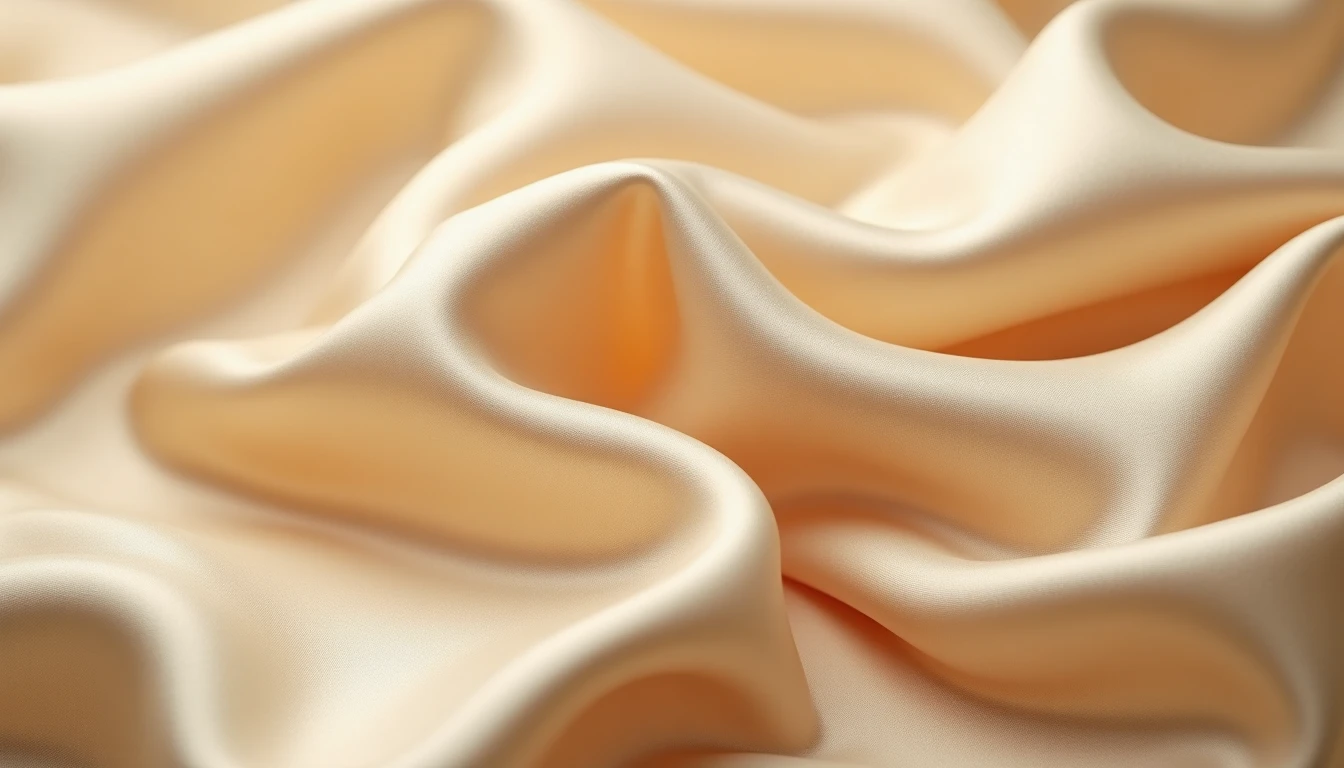
Satin trips people up because it sounds like a fiber, and it isn’t. Satin is a weave structure: the warp (or weft) yarns float over four or more yarns before going under one, so very few interlacings show on the surface. Those long floats reflect light evenly, which is what gives satin its signature glossy face and a duller, flatter back. Satin can be woven from silk, polyester, nylon, acetate, or, as sateen, cotton.
Here’s how the main members of the satin family compare:
| Fabric | Traits | Best Uses |
|---|---|---|
| Charmeuse | Lightweight, silk or polyester filament, a light float ratio (often 4- or 5-over-1) for maximum shine and the most fluid drape in the family | Lingerie, slip dresses, blouses, scarves |
| Duchess (duchesse) satin | Heavy, densely woven, stiffer and less shiny than charmeuse, holds a structured shape | Bridal gowns, structured eveningwear, full skirts |
| Crepe-back satin | Reversible, one side a glossy satin face, the other a pebbly crepe texture, heavier than charmeuse with more body | Either side can face out; blouses and dresses needing less slip than charmeuse |
| Sateen | Satin weave made with short-staple spun yarns (usually cotton) instead of filament, softer and more matte, much less slippery than silk or polyester satin | Bedsheets, quilting-weight dresses, home decor |
A fifth, less common variant, antique or slipper satin, is a firm, medium-heavy satin with a duller sheen than charmeuse, traditionally used for bridal shoes, structured bodices, and historical costume.
The same long floats that create satin’s shine also make it slippery, prone to fraying, and quick to show every needle hole and pin snag. Use a fine microtex 60/70 or 70/80 needle, shorten your stitch length slightly, place pins only within the seam allowance (or use fine silk pins), and finish seams with French seams or a serger to contain fraying. Press on low heat with a press cloth or from the wrong side; a too-hot iron leaves permanent water spots and shine marks on the glossy face.
Specialty and Decorative Fabrics
- Chiffon is a sheer, lightweight plain-weave fabric (silk, polyester, or nylon) made from tightly twisted crepe yarns, airy with a slightly rough hand, and it floats and puckers as it moves. Best for overlays, scarves, eveningwear, and ruffles. (Hard: shifts constantly, needs French seams and tissue-paper stabilizing.)
- Crepe (including crepe de chine) is woven from silk, polyester, wool, or rayon with tightly twisted yarns that create a pebbly, bumpy surface (crepe de chine is the lightweight silk or silk-look version), matte and slightly textured with good drape and wrinkle resistance. Best for blouses, dresses, and linings. (Medium-hard: slippery and textured, use a fine needle and pattern weights.)
- Brocade (or jacquard) is woven with a raised, decorative pattern created on a jacquard loom, not printed or embroidered, textured, often stiff, medium-heavy weight, sometimes threaded with metallic yarns. Best for structured jackets, eveningwear, upholstery, and formal skirts. (Medium-hard: thick and can fray or unravel at the raised motifs, underline for stability.)
- Lace is an openwork fabric (woven, knitted, or netted) with a decorative pattern and open holes, often finished with a scalloped or corded edge, delicate and textured, ranging from stretch to stiff. Best for overlays, trim, bridal and eveningwear, and appliqué. (Hard: the openwork snags and stretches unevenly, use a fine needle and stabilizer.)
- Tulle (or netting) is a lightweight, fine net fabric (nylon, polyester, or silk) made of hexagonal machine-knotted mesh, sheer and somewhat stiff, scratchy to soft depending on the fiber, and it holds volume. Best for veils, tutus, skirt overlays, and gathered trims. (Medium: snags on pins and serger blades, gather with a zigzag stitched over cord.)
- Velvet is woven from silk, cotton, polyester, or rayon with a short, dense cut pile standing up from the base weave, plush and soft with a directional sheen that shifts as light hits the nap. Best for eveningwear, blazers, accessories, and holiday garments. (Hard: the pile crawls and crushes under pressing, use a walking foot, check nap direction, press face down on a needle board or towel.)
- Taffeta is a crisp plain-weave fabric (silk, acetate, or polyester) woven from fine, tightly woven yarns, smooth, stiff, crisp, and it rustles audibly when it moves. Best for structured gowns, bows, and linings that need body. (Medium-hard: frays and shows every pin and needle mark, handle minimally.)
- Sequin fabric is a base fabric (mesh, knit, or woven) with sequins individually stitched or strung in overlapping rows across the surface, heavy, stiff, and textured, with sharp edges on cut sequins. Best for eveningwear, costumes, and dance and performance wear. (Hard: sequins dull or break needles, remove sequins from seam allowances before stitching.)
- Minky (or plush) is a knit polyester (microfiber) fabric with an ultra-soft, dense pile similar to faux fur but shorter, extremely soft, plush, thick, and warm. Best for baby blankets, stuffed toys, loungewear, and robe linings. (Medium-hard: the pile sheds and shifts, use a walking foot and a slightly longer stitch.)
Quick-Reference Chart
| Fabric | Category | Weight | Stretch | Sewing Difficulty | Best For |
|---|---|---|---|---|---|
| Quilting cotton | Cotton family | Medium | None | Easy | Quilts, bags, beginner garments |
| Jersey | Knits | Light-medium | High (crosswise) | Medium | T-shirts, casual dresses |
| Linen | Other naturals | Light-medium | None | Easy-medium | Summer clothing, home textiles |
| Denim | Cotton family | Medium-heavy | None (unless blended) | Medium | Jeans, jackets, workwear |
| Canvas | Cotton family | Heavy | None | Medium-hard | Bags, upholstery, outerwear |
| Polar fleece | Synthetics | Medium | Some | Easy | Jackets, blankets, loungewear |
| Flannel | Cotton family | Medium | None | Medium | Pajamas, shirts, quilts |
| Satin / charmeuse | Satin family | Light | None | Hard | Lingerie, slip dresses, blouses |
| Chiffon | Specialty | Light | None | Hard | Overlays, scarves, eveningwear |
| Velvet | Specialty | Medium-heavy | None (unless stretch velvet) | Hard | Eveningwear, blazers, accessories |
| Viscose (rayon) | Rayon family | Light-medium | None | Medium-hard | Blouses, dresses, linings |
| Lyocell (Tencel) | Rayon family | Light-medium | None | Medium | Blouses, dresses, sustainable basics |
| Wool (flannel/coating) | Other naturals | Medium-heavy | None | Medium | Trousers, jackets, coats |
| Faux leather | Synthetics | Medium-heavy | None | Hard | Jackets, bags, accessories |
| Tulle | Specialty | Light | None | Medium | Veils, tutus, skirt overlays |
How to Choose From All of This
With this many types of fabric on the shelf, the fastest way to choose is to start from your pattern. Most patterns already name their suggested fabrics based on the drape, weight, and stretch the design needs, and our guide to choosing fabric walks through how to shop from there. Once you’ve picked something up, get the washing and care right before you cut; prewashing prevents surprises after the garment is finished, and our fabric care guide covers what each fiber needs. If you’re brand new to sewing, start with the easy column on the chart above, and let our beginner roadmap get you oriented first.
Every pattern in our library names its suggested fabrics up front, so you’re never guessing what to buy. Browse the 155+ printable PDF sewing patterns for step-by-step instructions on exactly what to cut.
Frequently Asked Questions
What are the main types of fabric?
Fabrics fall into a few broad families: natural woven fibers (cotton, linen, wool, silk), knits (jersey, rib, fleece), synthetics (polyester, nylon, acrylic), semi-synthetic rayons (viscose, modal, lyocell/Tencel), and specialty or decorative fabrics (satin, lace, velvet, tulle).
How are fabrics categorized?
By fiber content (what it’s made of, such as cotton, wool, or polyester), by construction (woven, knit, or non-woven like felt), and by weave or finish (twill, satin, plain weave, brushed/napped).
What is lyocell fabric?
Lyocell is a semi-synthetic fiber made by dissolving wood pulp in the non-toxic solvent NMMO and regenerating it into fiber through a closed-loop process. Tencel is the trademarked Lenzing brand of lyocell.
Is Tencel better than cotton?
Tencel drapes more fluidly, wicks moisture better, and comes from a lower-impact closed-loop production process, but lightweight Tencel wrinkles more and isn’t as sturdy for structured garments as cotton. Each fabric suits different projects.
What is satin weave?
Satin is a weave structure, not a fiber. Yarns float over four or more threads before going under one, creating a glossy, reflective face and a duller back. It can be made from silk, polyester, nylon, or cotton (sateen).
What fabric is easiest to sew?
Quilting cotton, poplin, and other stable, tightly woven cottons are easiest for beginners because they don’t stretch, fray minimally, and press crisply.
What is the most durable fabric for clothing?
Tightly woven, heavyweight fabrics like denim, canvas/duck cotton, and nylon (especially ripstop) rank among the most durable choices for everyday wear and workwear.
What is muslin used for?
Muslin (called calico in the UK) is a cheap, loosely woven cotton used to test-sew a pattern, a “muslin” or toile, before cutting into the final fabric. It’s also used for basic utility sewing.