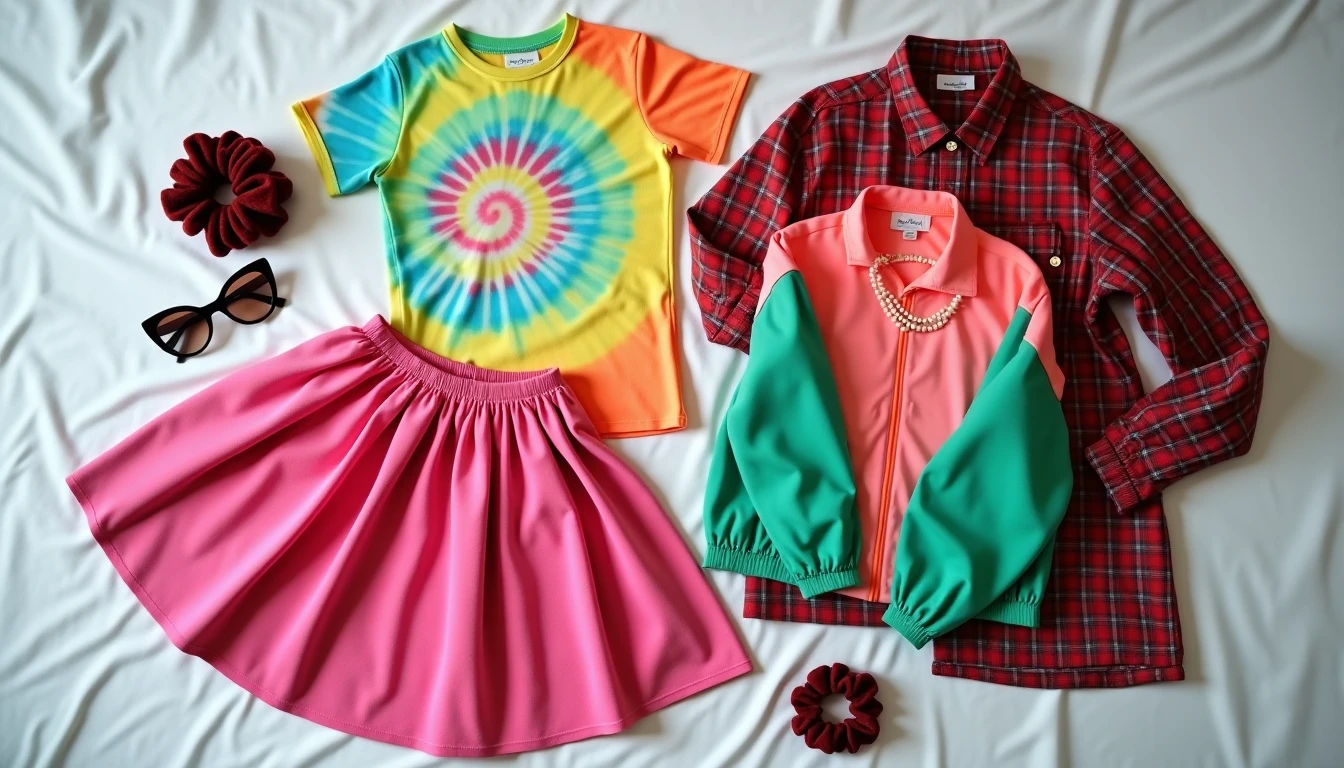
Decades day is a spirit week staple that sounds fun until you’re staring at your closet the night before, wondering how to look like the 1970s. Most schools hand each grade a different era, and some let students pick their own. Picking a decades day outfit goes faster once you stop thinking about buying a costume and start thinking about which decade your closet already speaks. A plaid skirt, a flannel, or a pair of jeans can anchor two or three different decades once you swap the accessories. For more no-sew builds worth stealing for spirit week, browse the Halloween costume ideas hub.
Some links below are affiliate links. Prices are 2025-2026 estimates and change often, so always check current pricing.
Pick Your Decade (Strategically)
Not every decade gets equal airtime at spirit week. The 1950s, 1970s, 1980s, and 1990s show up again and again as the go-to assignments, with the 1920s and 1960s as usual backup picks for schools that reach further back. The 2000s (Y2K) is climbing fastest right now: Gen Z has been reviving low-rise jeans and velour tracksuits on TikTok for a few years, and one survey found more than half of Gen Z feel nostalgic for the 2000s, well ahead of the 90s.
Before you plan anything, take a lap through your own closet, then a parent’s or grandparent’s. A plain white tee and jeans covers the 1950s greaser look and most of the 1990s. A denim jacket works for the 60s, 70s, and 90s depending on what you pair it with. The piece that actually sells a decade is almost never the base outfit, it’s the hair and accessories. Finger waves and a pearl strand read as 1920s instantly. A side ponytail with a scrunchie reads as 1980s even over a plain sweatshirt. Spend your prep time there first.
1920s
Her look is a drop-waist flapper dress or a simple shift with fringe added at the hem, worn with long pearl strands, a low headband and feather clip, and finger-wave hair. His look is a newsboy cap, suspenders over a button-up shirt, and trousers, the classic working-class silhouette of the decade. Add a bow tie and vest to dress it up. The one DIY piece worth doing is a fringe hem: hand-stitch or hot-glue rows of fringe trim, or cut your own fringe strips from scrap fabric, onto the bottom third of a plain dress or tee. It takes under an hour and instantly reads as flapper.
1950s
Her look is a poodle skirt in a bright color like pink or yellow over a fitted top, a scarf tied at the neck, saddle shoes or flats, and cat-eye sunglasses. His look is the greaser: a white tee and cuffed jeans under a black leather jacket, a bandana, boots, and slicked-back or pompadour hair. The signature DIY here is a no-sew felt circle skirt with a poodle appliqué and ribbon leash, full instructions are below since it’s the most requested build on this list.
1960s
Her look splits two ways: a mod shift dress or mini skirt with go-go boots and oversized sunglasses for the clean mod version, or tie-dye, a fringe vest, and peace-sign jewelry for the late-60s hippie route. His look mirrors that split, a slim suit with narrow lapels for mod, or a fringe vest over a plain tee with round sunglasses and a peace sign necklace for hippie. The DIY piece is a spiral tie-dye tee, which we walk through step by step further down.
1970s
Her look is bell-bottoms or flared jeans with a tank or crop top, a headband, platform shoes, and big sunglasses, with a shiny or sequin top swapped in for a disco angle. His look is bell bottoms again, paired with a band tee or a disco-collar button shirt and a fringe vest, plus a headband or wide collar for flair. The DIY piece is turning straight jeans into real bell bottoms with a fabric insert, which is easier than it sounds and covered in detail below.
1980s
Her look is neon leggings or acid-wash jeans with leg warmers, an off-shoulder sweatshirt, a side ponytail with a scrunchie, and bold statement jewelry. His look is a windbreaker or track suit over a plain tee with white high-top sneakers, or a denim jacket as a swap. The signature DIY is the Flashdance cut, turning a plain sweatshirt into an off-the-shoulder top with nothing but a pair of scissors. Full steps are in the next section.
1990s
Her look is a plaid flannel tied at the waist over ripped jeans or overalls with one strap down, or a slip dress for a dressier option, finished with a bucket hat and butterfly hair clips. His look is a flannel over a graphic tee with baggy jeans, a backwards cap or bucket hat, and chunky sneakers. The quick DIY here is a no-sew scrunchie, which also doubles as your Y2K hair piece if you’re covering two decades in one week.
2000s (Y2K)
Her look is low-rise jeans or track pants with a fitted baby tee, chunky sneakers or platform heels, tinted sunglasses, and hair clips, with a velour tracksuit as the dressier version. His look is velour or track-suit separates over a white tee, a trucker hat worn slightly askew, and chunky sneakers, or layered graphic tees with a chain for a more casual take. For a fast DIY accent, bedazzle a plain baby tee or trucker hat with iron-on or glue-on rhinestones along the neckline or logo.
The DIY Pieces, Step by Step
Felt poodle skirt (1950s). Draw a small circle sized to your waist measurement, then a larger concentric circle sized to your waist plus how long you want the skirt, and transfer both to felt to cut a donut shape. Cut one straight slit from the inner circle to the outer edge so it opens into a wearable skirt, then close the opening with two or three self-adhesive Velcro tabs instead of sewing in a zipper. Glue or appliqué a felt poodle shape near the hem with a ribbon “leash” trailing up toward the waist. Felt doesn’t fray, so there’s no hemming at all. If you want the exact circle math worked out for your size, our how to sew a skirt guide covers the formula. For supplies, a bundle of felt sheets and yardage will cover the skirt and the poodle appliqué in one order.
Bell-bottom insert (1970s). Try on straight or skinny jeans and mark where you want the flare to start, roughly at the knee. Use a seam ripper to open the outer leg seam from that mark down to the hem. Cut a triangular fabric insert (a godet), about 6 inches wide at the bottom tapering to 2 inches at the top, and roughly 18 inches tall for an adult leg, in a fabric close in weight to denim. Pin it into the opened seam right sides together, sew it in by hand if your machine struggles with thick denim layers, then re-hem the leg.
Flashdance off-shoulder cut (1980s). Mark a curved line about an inch below the existing collar on a sweatshirt, running from just outside the neckline on one side to roughly halfway between the neck and shoulder seam on the other. Cut through both fabric layers along that line. Sweatshirt fleece doesn’t fray, so the raw edge is the finished look, and it curls more after a wash and dry cycle.
Fringe hem (1920s or 1970s vest). Snip narrow vertical slits up from the raw edge of a plain tee or dress hem, or hand-sew or hot-glue purchased fringe trim along a hemline or vest edge. The same technique covers a flapper dress hem or a suede-look vest.
No-sew scrunchie (1990s or Y2K). Cut a fabric strip about 4 inches wide by 21 inches long, fold it lengthwise, and either iron in a hem-adhesive strip to seal it, glue the long edge with fabric glue, or braid it: loop the fabric around a hair elastic and pull the loose ends through the loop repeatedly until the elastic is fully covered, then knot or glue to finish. For more no-sew builds like this one, check easy sewing projects.
Spiral tie-dye tee (1960s). Dampen a plain cotton tee, pinch the center point, and twist the fabric around that point into a flat spiral. Secure it with three rubber bands crisscrossed over the spiral to form six dye-able wedges, apply dye to each one, seal the shirt in a plastic bag to let it set, then rinse and wash. For color combos and setting times, our fabric dyeing guide has the full rundown.
Group and Squad Ideas
Friend groups usually split one of two ways. A one-decade squad puts everyone in the same era, say a full crew of 90s grunge with flannels and bucket hats, so the group photo reads as one matched theme. A timeline squad assigns each friend a different decade so the lineup tells the story of the 20th century in one row, which works especially well for a group of six or more where each person only has to build one look. Either way, check the dress code before you finalize anything. Hemlines, necklines, and any fringe or cutout DIY piece still have to clear the same handbook rules as a normal school day, so keep the poodle skirt knee-length and the off-shoulder cut modest enough to pass.
Once you’ve picked your era, our library of 155+ printable PDF sewing patterns has patterns for skirts, vests, and other era pieces if you’d rather sew from a template than freehand it.
Frequently Asked Questions
What do you wear for decades day?
Pick one decade, schools often assign one per grade, and build the outfit around that era’s most recognizable silhouette. A poodle skirt covers the 1950s, bell-bottoms cover the 1970s, and a flannel with ripped jeans covers the 1990s. Finish with era-correct hair and accessories, which read as strongly as the clothes themselves, and check your own closet and a thrift store before buying anything new.
How do you make a poodle skirt?
Cut a large donut shape from felt: an inner circle sized to your waist and an outer circle sized to your waist plus the skirt length you want. Slit it open from the inner to the outer edge, fasten the opening with Velcro tabs, and glue on a felt poodle shape with a ribbon leash near the hem. Felt doesn’t fray, so no sewing or hemming is required.
What is an easy 80s outfit?
Neon leggings or acid-wash jeans, leg warmers, an off-the-shoulder sweatshirt (cut the neckline yourself for the Flashdance look), a side ponytail with a scrunchie, and bold jewelry. Most of it is buildable straight from a closet plus a thrifted sweatshirt and leg warmers.
How do you make bell bottoms from regular jeans?
Open the outer leg seam of a pair of straight or skinny jeans from about the knee down to the hem with a seam ripper. Cut a triangular fabric insert, roughly 6 inches wide at the bottom tapering to 2 inches at the top and about 18 inches long, and sew it into the opened seam on each leg, then re-hem.
What should I wear for 90s day at school?
A flannel shirt tied at the waist over a plain tee, ripped or baggy jeans (or overalls with one strap down), a bucket hat or backwards cap, and butterfly hair clips. A plaid mini skirt with a crop top is a Clueless-inspired alternative if you want a dressier decade day outfit.
What is a Y2K outfit?
Y2K style centers on low-rise jeans or track pants with a fitted baby tee, a velour tracksuit as a dressier option, a trucker hat worn slightly askew, tinted sunglasses, and chunky sneakers or platform shoes, the exact look Gen Z has been reviving on TikTok and Instagram since around 2020.