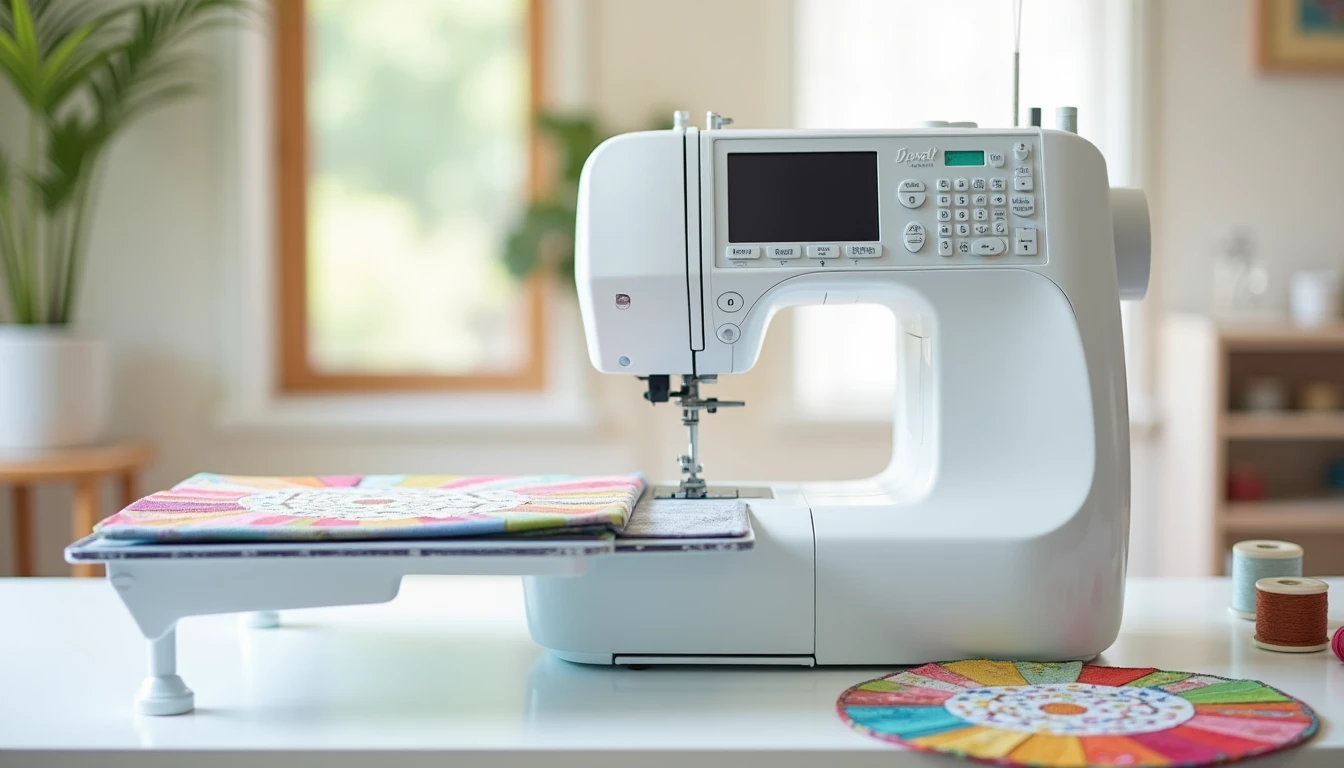
Open any “best sewing machine for beginners” list and you’ll find the Brother CS7000X sitting near the top, usually in the first three picks. Our own sewing machine buying guide ranks it the same way, and we’re not going to pretend otherwise. But a machine showing up on every list for years raises a fair question: is it actually good, or is it the machine every blogger already owns and recommends out of habit?
This review goes through the CS7000X’s real specs, the parts that genuinely help beginners, and the parts that will annoy you once the honeymoon period ends. No filler, no rounding up the good and rounding down the bad.
Some links below are affiliate links. Prices are 2025-2026 estimates and change often, so always check current pricing.
Quick Verdict Box
The Brother CS7000X is a solid, honest pick for a first computerized sewing machine, especially if you plan to try quilting alongside garment sewing. It doesn’t excel at any single thing, but it covers a wide range of beginner and hobbyist needs at a price that’s hard to argue with. Brother lists it at $279.99 MSRP, though in practice it’s commonly discounted to around $180 to $250 on Amazon and at retailers like Walmart and Best Buy, so it’s worth comparing prices before you buy. You can check current listings for the Brother CS7000X on Amazon.
Specs That Matter
Here’s what you actually get in the box, without the marketing language.
| Spec | Detail |
|---|---|
| Built-in stitches | 70 |
| Buttonhole styles | 7 (one-step, auto-size) |
| Max speed | 750 stitches per minute (SPM) |
| Weight | 10.5 lbs |
| Included feet | 10, including a walking foot and a 1/4-inch piecing foot |
| Extension table | Wide, detachable quilting table included |
| Warranty | 25-year limited warranty |
A few of these numbers deserve context. The 750 SPM top speed sounds impressive until you compare it to mechanical machines in a similar price bracket, more on that below. The 10.5 lbs weight is lighter than a lot of buyers expect (some older reviews float a ~14 lb figure that doesn’t match Brother’s current spec sheet), and it’s light enough to carry to a class or a friend’s house without dreading the trip.
The machine also comes with an LCD screen for stitch selection, an automatic needle threader, a drop-in top-loading bobbin, an adjustable speed slider, a start/stop button so you can sew without a foot pedal, needle up/down positioning, a free arm, and a drop feed for free-motion work. If any of those terms are new to you, our guide to learning the machine walks through what each control actually does once the machine is out of the box.
What It Gets Right
The CS7000X’s biggest strength is what it includes for the price, not any single standout feature.
Quilting extras that aren’t an upsell. The wide extension table and the walking foot come in the box. Plenty of competing machines at this price either omit these entirely or charge extra for them as accessories. Combined with the 1/4-inch piecing foot, you have what you need to start piecing and quilting small to medium projects right away. If you’re brand new to the craft, our quilting for beginners guide covers how to put that table and walking foot to use on your first project.
Controls built for nervous hands. The speed control slider lets you cap how fast the machine will go, so you can practice at a crawl before working up to full speed. Paired with the start/stop button, you can sew a straight line without ever touching a foot pedal, which matters more than it sounds like when you’re still building muscle memory.
Threading that doesn’t fight you. The redesigned automatic needle threader is noticeably more reliable than the one on older Brother budget models, and the drop-in top bobbin is easy to see through and load, resisting jams better than front-loading systems on older machines. Threading a needle used to be the single most common reason beginners gave up early; this version of the mechanism removes a lot of that friction.
Quiet, smooth, and light. Reviewers consistently describe the CS7000X as stable even when pushed toward its top speed, and the 10.5 lb body with a carry handle makes it genuinely easy to carry to a class or retreat, unlike heavier machines that get labeled “portable” more out of hope than accuracy.
What Will Annoy You
None of these are dealbreakers on their own, but they add up, and you should know about them before you buy rather than after.
It’s mostly plastic. The internal frame is metal, but most of the housing and attachment pieces are hard plastic. That’s normal for this price class, but it does raise legitimate questions about how the machine holds up under years of heavy or daily use rather than occasional hobby sessions.
It’s not a heavy-fabric workhorse. The CS7000X can push through a few layers of denim or a bound quilt sandwich without much drama, but it’s not built for constant heavy-duty use on leather, canvas, or many-layered upholstery fabric. If that’s your regular project, this isn’t the machine, full stop.
It’s actually slower than its predecessor. At 750 SPM, the CS7000X is 100 SPM slower than the CS6000i it replaced (850 SPM), and well behind mechanical machines like the Singer Heavy Duty line, which hit 1,100 SPM. Brother traded some speed for the extra stitches and better threader, and whether that trade is worth it depends on how much you value raw speed versus stitch variety.
No thread cutter. You’ll be snipping threads by hand every time, a feature some rival machines near this price point have already added.
The screen is basic. The LCD is small, not backlit, and can be hard to read in a dim sewing room without extra task lighting nearby.
Buttonhole consistency also comes up in user reviews more than you’d expect from a “one-step, auto-size” feature, and there’s no knee lifter or automatic tension control, both fine omissions for a beginner machine but worth knowing about if you’ve used a higher-tier model before.
CS7000X vs the Competition
Vs. Singer Heavy Duty 4423. This is the classic computerized-features-versus-mechanical-muscle tradeoff. The 4423 has only 23 stitches, no LCD, no needle threader convenience, and no quilting extras, but it has an all-metal body, a 60% stronger motor, and hits 1,100 SPM. If your priority is toughness and speed on heavy fabric like denim and canvas, the Singer Heavy Duty 4423 on Amazon is the sturdier choice. If you want stitch variety, ease of use, and quilting readiness, the CS7000X wins.
Vs. Brother XM2701. This is Brother’s own cheaper mechanical sibling: 27 stitches, a basic needle threader, no LCD, no speed slider, no wide table, no walking foot. It’s a fine ultra-budget option for simple repairs and basic garment work, but the CS7000X is the clear upgrade if you want to quilt or want a more feature-rich, computerized machine and can afford the moderate price jump.
Vs. Brother CS6000i. The CS7000X is the direct successor, and the differences are real: 70 stitches versus 60, an added 1/4-inch piecing foot, a more durable needle threader, and repositioned controls, at the cost of that 100 SPM speed drop and, in some bundles, a smaller accessory pouch. For most beginners, it’s a net upgrade. Speed-focused sewists occasionally still seek out remaining CS6000i stock, but that’s a narrow use case.
Vs. Janome 2212. A bare-bones mechanical machine with just 12 stitches, prized for simple dial controls and a solid build. It’s the purist’s pick for straightforward garment repair without any computerized features, but it has no LCD, no quilting table, no walking foot, and far less stitch variety. Only worth considering if you explicitly want the simplest machine possible.
Who Should Buy It (and Who Should Not)
The CS7000X is best suited for true beginners, hobbyist quilters just starting out, and casual sewists who want one machine that can handle garment construction, mending, and basic-to-intermediate quilting without a big upfront investment. It’s a solid choice for sewing classes, as a gift for a new sewist, and for anyone who values easy threading and pedal-free operation over raw power. If you’re getting started on clothing projects specifically, our garment sewing guide is a good next stop after you’ve unboxed the machine.
Skip it if you do frequent heavy-denim or leather work, sew at production or daily commercial volume, or care more about raw speed and an all-metal body than computerized conveniences. Those users are better served by a mechanical heavy-duty machine or a mid-tier workhorse built for constant use.
Once you’ve got the machine set up, you’ll want projects to actually sew. Our library of 155+ printable PDF sewing patterns is a straightforward next step if you want ready-to-print patterns rather than a course to work through: browse the pattern library.
Frequently Asked Questions
Is the Brother CS7000X good for beginners?
Yes. Its automatic needle threader, drop-in bobbin, start/stop button, and speed control slider are specifically designed to remove the most frustrating parts of learning to sew, and its 70 stitches give new sewists plenty of room to grow without needing to upgrade machines quickly.
Can the Brother CS7000X sew thick fabric like denim?
It can handle a few layers of medium-to-heavy fabric, including moderate denim seams and quilt sandwiches, but it is not a heavy-duty workhorse. It manages several layers reasonably well but isn’t built for constant heavy denim, canvas, or leather work. For that, a mechanical heavy-duty machine like the Singer 4423 is a better fit.
What is the difference between the CS7000X and the CS6000i?
The CS7000X replaced the CS6000i as Brother’s flagship budget computerized model. It adds 10 stitches (70 versus 60), a 1/4-inch piecing foot, a more reliable needle threader, and updated styling and control placement, but drops top speed slightly from 850 SPM to 750 SPM and, in some bundles, the small accessories pouch.
Does the CS7000X come with a walking foot?
Yes. A walking foot is included among its 10 presser feet, along with a 1/4-inch quilting and piecing foot, both genuinely useful for quilting and extras some competing machines at this price don’t include.
Can you quilt on a Brother CS7000X?
Yes, it’s designed with quilters in mind. It includes a detachable wide extension table for maneuvering larger quilt tops, a walking foot and 1/4-inch piecing foot, a free arm, and a drop feed for free-motion quilting, enough to comfortably start piecing and quilting small-to-medium projects.
Is the brother cs7000x worth it in 2026?
For its typical street price of roughly $180 to $250, yes, it remains one of the best value computerized machines for beginners and hobbyist quilters thanks to its included quilting accessories, stitch variety, and beginner-friendly controls. It’s not worth it for buyers who need heavy-duty durability, faster stitching speeds, or daily production use, where a mechanical or higher-tier machine makes more sense.