Holiday sewing projects don’t have to mean fitted garments or fussy patterns. Most of the best seasonal makes are flat, fast, and forgiving: a rectangle folded into a pouch, a circle cut into a tree skirt, a handful of felt shapes stitched into an ornament. This roundup organizes real, doable holiday sewing projects by occasion, starting with Christmas and winter (where most of the interest, and most of the fun, lives), then moving through Valentine’s Day, Easter and spring, summer and the Fourth of July, fall and Thanksgiving, and a year-round bank of quick-gift makes you can re-skin for any holiday just by swapping the fabric. Every project below lists what it is, the skill level, the fabric to reach for, and a real quick approach, so you can go straight from this page to your machine. Costumes get their own dedicated guide over at how to make a costume. This page is about decor, gifts, and home-for-the-holidays makes.
Some links below are affiliate links. Prices are 2025-2026 estimates and change often, so always check current pricing.
Christmas & Winter Sewing Projects

Christmas carries the bulk of the holiday sewing calendar, so it gets the longest list. These fourteen projects cover the mantel, the tree, the gift table, and the wrapping station.
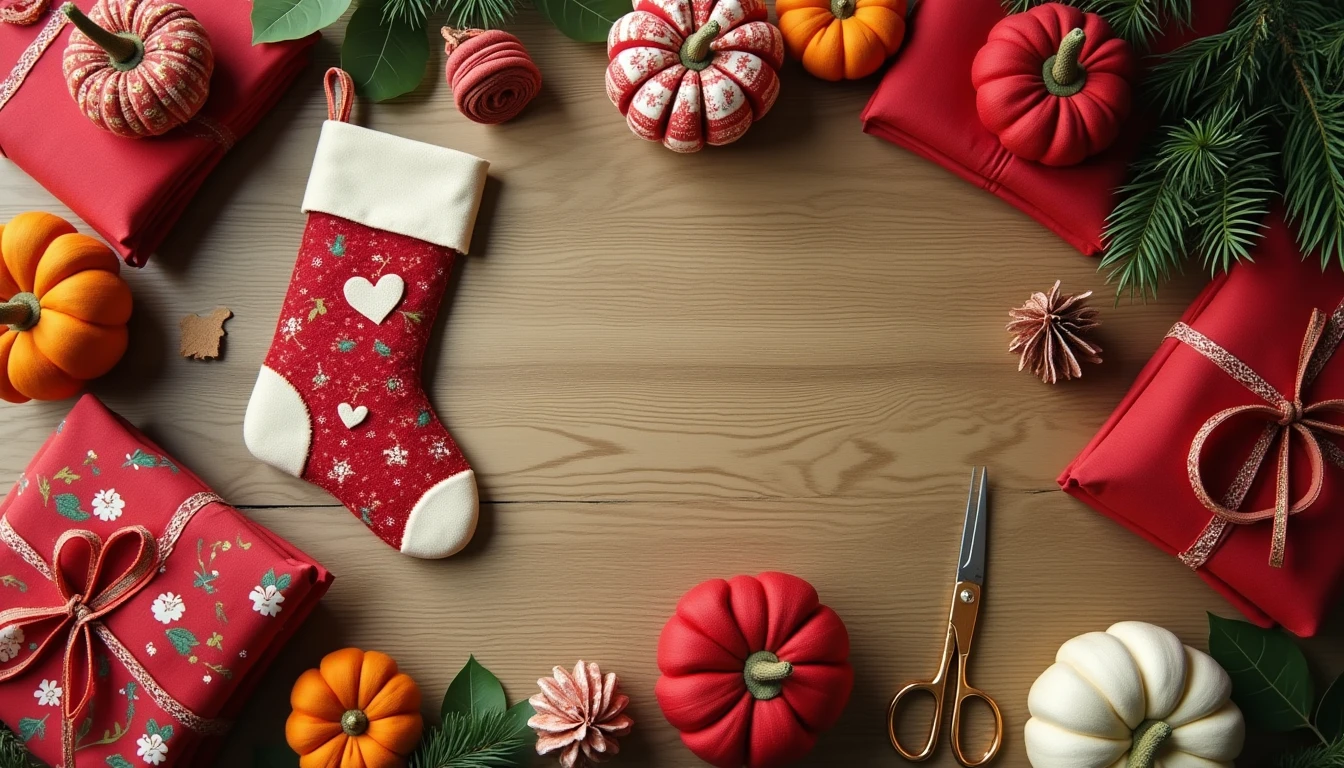
- Christmas Stockings. Beginner. Use quilting cotton (lined) or wool-blend felt (unlined). Trace a stocking template onto two layers of fabric, or four if you’re lining it, sew right sides together leaving the top open, turn, and add a fabric loop for hanging. Felt versions skip lining and hemming entirely, since felt won’t fray. Just stitch around the edge and add a name in appliqué or embroidery.
- Mini Stocking Garland. Beginner. Use wool-blend felt in two or three coordinating colors. Cut a mini stocking shape about 4 to 5 inches tall from doubled felt, stitch around the edge with a straight or blanket stitch leaving the top open, then hot-glue or clip each one onto a length of twine or ribbon.
- Quilted Tree Skirt. Intermediate. Use quilting cotton jelly rolls or fat quarters, cotton batting, and backing fabric. Piece a simple star or strip-pieced patchwork top, layer with batting and backing, quilt with straight lines, then cut into a large circle with a smaller circle removed from the center and one straight slit to the middle so it wraps around the trunk.
- No-Sew Felt Tree Skirt. Beginner. Use felt, faux fur, or fleece, any fray-free fabric works. Fold felt into quarters, trace and cut a large half-circle from the folded point, then cut one straight slit from the outer edge to the center. Hot-glue on felt snowflakes or pom-pom trim. No hemming required.
- Fabric Advent Calendar. Intermediate. Use quilting cotton for the background and pockets, plus fusible fleece or mid-weight interfacing for structure. Fuse fleece to a large background panel for body, then sew 24 fabric pocket sleeves (roughly six across, four rows) with a folded top edge, topstitching each pocket in place before binding the raw edges and adding numbers by appliqué or iron-on vinyl.
- Felt & Fabric Ornaments. Beginner. Use wool-blend felt, denim scraps, or quilting cotton scraps. Cut two matching shapes (a star, a gnome, a heart), sew around the edge leaving a gap to stuff with fiberfill, then whipstitch the gap closed and add a thread or ribbon loop. If whipstitch is new to you, our hand sewing stitches guide walks through it step by step.
- DIY Ugly Christmas Sweater. Beginner. Use a thrifted sweater or sweatshirt plus felt scraps, pom-poms, mini bells, and tinsel trim. Cut trees, snowmen, or gift shapes from felt and appliqué them on with a machine zigzag or hand blanket stitch, then hand-stitch or hot-glue on pom-poms, bells, and tinsel for texture. This one is genuinely no-sew friendly too, since fabric glue holds felt and trim just as well for a one-night wear.
- Hot Cocoa / Gift Drawstring Bags. Beginner. Use holiday-print quilting cotton plus ribbon or cord for the drawstring. Sew a rectangle of fabric into a tube, fold and stitch a casing near the top, thread ribbon or cord through with a safety pin, and sew or serge the bottom shut. One fat quarter makes two or three bags.
- Quilted Christmas Table Runner. Intermediate. Use quilting cotton (trees, gnomes, or plaid prints) and thin cotton batting. Piece simple patchwork blocks or strips in a Christmas print line, layer with batting and backing, quilt with straight lines, then bind the edges with matching or contrasting strips.
- Christmas Tree Potholders. Beginner. Use quilting cotton fat quarters plus insulated, heat-resistant batting (not regular cotton batting). Cut a tree-shaped or square front and back, sandwich two layers of insulated batting between them, quilt or topstitch through all layers, then bind the edge and add a fabric loop for hanging.
- Elf-Pants Gift Bags. Beginner. Use striped or bright-colored quilting cotton plus jingle bells for the toes. Sew two leg-shaped panels together, leaving the waist open, stuff the curled toe tips lightly, sew a bell to each point, then finish the waist with a drawstring casing so the whole thing cinches shut around a gift.
- Fabric Gift Wrap (Furoshiki Bags). Beginner. Use light-to-medium woven cotton or linen, roughly three times the size of the item you’re wrapping. Cut a square of fabric, finish the raw edges with a narrow double-fold hem and mitered corners, and it’s done. The fabric itself does the work, tied around the gift like a scarf. A 26-inch square wraps a typical box; a 40-inch square handles bottles or larger gifts.
- Quilted Tree Wall Hanging. Intermediate. Use quilting cotton scraps, thin batting, and a wood dowel for hanging. Piece a simple triangle “tree” block from green scraps with a brown trunk strip, quilt and bind it like a mini quilt, then add a fabric sleeve on the back to slide the dowel through.
- Zippered Gift Pouches. Beginner. Use quilting cotton fat quarters or scraps plus a 7 to 9 inch zipper. Sew a zipper between two rectangles of fabric (and lining if you want one), then sew around the remaining three sides and turn right side out through the open zipper. One fat quarter makes several pouches, and they double as reusable gift wrap the receiver keeps.
Valentine’s Day Sewing Projects
Seven quick, sweet projects for February, most of them scaled down from the same techniques you’ll use at Christmas.
- Heart Throw Pillow. Beginner. Use quilting cotton in reds, pinks, and cream. Appliqué a single bold heart onto a plain pillow front (fusible web plus a zigzag stitch is the fastest route), or piece a simple patchwork heart from squares, then sew the front to a back panel with an envelope-back closure and stuff or insert a pillow form.
- Sweetheart Fabric Garland. Beginner. Use cotton scraps or felt, plus twine or ribbon. Cut heart shapes from doubled fabric or single-layer felt, stitch a line down the center to fold each one over a length of twine, and space them evenly along the string.
- Heart Coasters / Mug Rugs. Beginner. Use cotton scraps and a scrap of batting. Layer a heart-shaped or square front, batting, and backing, quilt with straight or wavy lines, then bind the edge or finish with a turn-and-topstitch method. A great one-fat-quarter, one-evening project.
- Heart Zip Pouch. Beginner. Use cotton scraps plus a 6 to 7 inch zipper. Appliqué a small heart onto the pouch front before construction, then sew the zipper between front and back rectangles and stitch around the remaining sides, the same boxy-pouch method used for any zip pouch, just with a heart on top.
- Heart Potholder. Beginner. Use cotton fat quarters plus insulated, heat-resistant batting. Sandwich two layers of insulated batting between a heart-appliquéd front and a plain back, quilt through all layers, then bind the edge and add a hanging loop.
- Fabric Flower Wreath. Intermediate. Use cotton or felt scraps and a foam or wire wreath base. Cut small fabric squares or circles and gather them into simple fabric flowers with a running-stitch gather along one edge, then hot-glue or wire them densely onto the wreath base until it’s fully covered.
- Drawstring Treat Pouch. Beginner. Use pink, red, or heart-print cotton scraps. Same fast drawstring-bag method as the Christmas hot cocoa bags: sew a rectangle into a tube, add a casing and cord at the top, and stitch the bottom shut. A great scrap-buster for a batch of classroom favors.
Easter & Spring Sewing Projects
Seven pastel-colored projects that carry you from egg hunts to the spring dinner table.
- Fabric Bunny Basket. Beginner. Use quilting cotton plus fusible fleece or heavyweight interfacing for structure. Sew a basic box-bottom fabric basket, fusing interfacing to the fabric for body and sewing boxed corners and handles, then stitch two long fabric ear shapes and tuck them into the top seam so they stand up above the rim.
- Felt Egg Softies / Egg Garland. Beginner. Use wool-blend felt in pastel colors. Cut two egg shapes from felt, sew around the edge leaving a small gap, stuff lightly with fiberfill, and whipstitch the gap closed. For a garland, skip the stuffing on some eggs and simply string finished eggs along ribbon.
- Simple Bunny Plush. Beginner. Use fleece or soft flannel scraps. Trace a simple bunny silhouette onto doubled fleece, sew around the edge leaving a gap for turning and stuffing, then stuff with fiberfill and whipstitch closed. No fussy joints or hand-sewn faces required, just a few stitched details. A true 10-minute project.
- Carrot Treat Bags. Beginner. Use orange cotton for the body and green felt for the leafy top. Sew a cone-shaped bag from orange fabric, gather or cinch the top with a drawstring, and add a few strips of green felt or ribbon at the opening to look like carrot greens.
- Pastel Spring Bunting. Beginner. Use cotton scraps in soft pink, yellow, mint, and lavender. Cut triangle flags from fabric or felt, sew or fold them over a length of bias tape or ribbon, and space them evenly, the same construction as a patriotic or Christmas bunting, just in spring colors.
- Spring Table Runner or Placemats. Intermediate. Use spring floral quilting cotton and thin cotton batting. Piece a simple patchwork or single-fabric runner and matching placemat set, layer each with batting and backing, quilt with straight lines, and bind the edges to match.
- Scrappy Bunny Bunting. Beginner. Use small scraps of spring floral and pastel cotton. Cut a simple bunny-silhouette template from an assortment of scraps, stitch each one over a length of ribbon or twine with a fold-and-topstitch method, and hang the finished strand across a mantel or window.
Summer & Fourth of July Sewing Projects
Six projects for backyard parties, picnics, and patriotic decorating.
- Patriotic Bunting / Banner. Beginner. Use cotton scraps, charm squares, or leftover quilting cotton in red, white, and blue. Cut triangle flags, sew or fold them over a strip of bias tape or wide ribbon, and space evenly. Add a simple appliquéd star to a few flags for extra detail.
- Flag or Star Applique Tee. Beginner. Use a plain cotton t-shirt plus red, white, and blue cotton or felt scraps. Fuse a flag or star shape (fusible web on the back of the scrap fabric) onto the shirt front, then secure the edges with a machine zigzag or straight stitch so it holds up through the wash.
- Fabric Flag Garland. Beginner. Use red, white, and blue cotton scraps or bandana squares. Cut small rectangle or pennant flags, fold each over a length of twine, and stitch or hot-glue in place along the string.
- Picnic Blanket or Placemats. Intermediate. Use canvas or heavyweight cotton on top, with a water-resistant backing like laminated cotton or oilcloth for the blanket version. Piece a simple patchwork or single-panel top, back it, and finish the edges with topstitched binding. Placemats use the same layer-and-bind method as the holiday runner projects, just in a summer print.
- Reusable Produce / Market Bag. Beginner. Use cotton mesh, muslin, or lightweight woven cotton. Sew a simple drawstring or tote-style bag from a rectangle of fabric, adding a casing and cord at the top for a drawstring closure, or straps for a tote version.
- Memorial / T-Shirt Quilt Keepsake. Intermediate. Use the t-shirts themselves, stabilized with lightweight fusible interfacing before cutting. Fuse interfacing to the back of each shirt panel to stop the knit from stretching, cut into uniform squares, and piece them like a simple patchwork quilt top. It’s a bigger undertaking than the other projects here, but it’s one of the most meaningful things you can sew around Memorial Day or the Fourth of July.
Fall, Halloween & Thanksgiving Sewing Projects
Six projects for the cozy stretch between the first cool morning and Thanksgiving dinner. Halloween costumes are covered in depth in our sister guide, the Halloween costume ideas hub. Head there for costume patterns, sizing, and no-sew options. This section sticks to fall and Thanksgiving decor and gifting.
- Fabric Pumpkins. Beginner. Use velvet, corduroy, or quilting cotton scraps. One of the most popular fall sewing projects online. Sew a circle of fabric into a tube (or cut it as a circle and gather the edge), stuff firmly with fiberfill, cinch the bottom closed, and pull a length of twine through the center to create the pumpkin ridges before topping with a cinnamon stick or twig stem.
- Fall Table Runner. Intermediate. Use quilting cotton in rust, mustard, and warm brown tones, plus thin cotton batting. Piece simple patchwork blocks, half-square triangles or strips both work well, into a long runner, layer with batting and backing, quilt with straight lines, and bind the edges.
- Cloth Dinner Napkins. Beginner. Use quilting cotton or linen. Cut fabric into 18 to 20 inch squares and finish the edges with a narrow double-fold hem and mitered corners for a neat finish. One of the simplest sewing projects there is, and a full set comes together in an afternoon.
- Pumpkin or Leaf Bunting. Beginner. Use felt in orange, rust, and mustard, or fall-print cotton scraps. Cut pumpkin or leaf shapes from felt, stitch or fold each over a length of twine, and space evenly along the string, the same bunting construction used for spring and patriotic garlands, just in fall shapes and colors.
- Thanksgiving Placemats. Beginner. Use fall-print quilting cotton and thin cotton batting. Layer a fabric front, batting, and backing for each placemat, quilt with straight lines, and bind the edges. Make four or six at once for a full table set.
- Fall Pillow Cover. Beginner. Use quilting cotton or corduroy in a fall print or solid. Sew an envelope-back pillow cover, two overlapping back panels sewn to a single front panel, so it slips over an existing pillow form and can be swapped out again for the next season.
Year-Round Quick Gift Makes
These seven projects are the workhorses of holiday sewing. Master the construction once, then re-skin each one in seasonal fabric for Christmas, Valentine’s, Easter, the Fourth of July, or fall. A single afternoon batch-sewing zip pouches or mug rugs in different holiday prints can cover a whole year of hostess and teacher gifts.
- Zip Pouch. Beginner. Use any fat quarter or cotton scrap plus a 7 to 9 inch zipper. Sew a zipper between a front and back rectangle, then stitch around the remaining sides and turn right side out. Swap in Christmas plaid, Valentine hearts, or Halloween print and it becomes a different holiday’s gift.
- Mug Rug. Beginner. Use cotton scraps and a small piece of batting. Layer a pieced or single-fabric front, batting, and backing, quilt with straight or wavy lines, and bind or turn-and-topstitch the edge. A favorite quick Christmas gift that works for any season.
- Drawstring Bag. Beginner. Use any quilting cotton fat quarter plus ribbon or cord. Sew a rectangle into a tube, add a folded casing near the top, thread cord through it, and stitch the bottom closed. The fastest gift-wrap alternative there is, and infinitely re-skinnable.
- Potholder. Beginner. Use cotton fat quarters plus insulated, heat-resistant batting, never plain quilt batting. Sandwich two layers of insulated batting between a front and back fabric panel, quilt through all layers, and bind the edge with a hanging loop.
- Fabric Coasters. Beginner. Use cotton scraps plus a scrap of batting or a double layer of cotton for body. Layer small squares or circles with batting, quilt lightly, and bind or turn-and-topstitch. A set of four uses barely a fat quarter.
- Key Fob / Wristlet. Beginner. Use fabric scraps plus fusible interfacing for body, and a key ring or swivel clasp. Fold and topstitch a fabric strip, interfaced for structure, into a loop, thread it through a swivel clasp, and stitch the ends closed.
- Reusable Snack Bag. Beginner. Use a cotton exterior with a laminated cotton or PUL lining, plus a zipper. Sew a zipper across the top of a folded fabric rectangle, then stitch around the sides. The lining keeps it food-safe and wipeable.
Holiday Sewing Tips for Beginners
A handful of habits make holiday sewing projects go faster and turn out better, no matter which season you’re sewing for.
- Match your fabric to the job. Quilting cotton works for most projects, no-fray felt is right for ornaments and stockings where you don’t want to hem, and flannel or fleece is the choice for anything meant to feel warm and soft.
- Use fusible fleece or mid-weight interfacing anywhere a project needs body without bulk, like advent calendar pockets, fabric baskets, and bag panels. See options on Amazon.
- For potholders and anything that touches a hot pan, use insulated, heat-resistant batting, not regular cotton or poly batting. Regular batting will not protect your hands.
- Batch-sew multiples in one sitting. If you’re making stockings, ornaments, or gift pouches, cut and sew several at once instead of starting from scratch for each one. It’s dramatically faster.
- Start with flat projects (pouches, runners, bunting, pillow covers) before moving to garments or 3D shapes like baskets and stuffed softies. Flat projects build confidence with far less risk of a fit problem, and a good basic kit from our sewing tools and notions guide is really all you need to start.
- Use scraps and precuts on purpose. Fat quarters (18 by 22 inches) and jelly rolls (2.5-inch strips) are sized perfectly for stockings, pouches, bunting, and mug rugs, so you rarely need to buy yardage for small projects. Craft felt is worth keeping on hand too. See options on Amazon.
- Prewash quilting cotton before cutting, especially for anything that will be washed later like napkins, placemats, or garments. It prevents shrinkage and puckering after the first wash. And when a project calls for a finished raw edge, our how to hem guide covers the double-fold and mitered-corner methods used throughout this list.
- Start early. Begin Christmas sewing by early-to-mid November, Valentine’s by late January, Easter about three weeks out, and Thanksgiving table linens the week before. Flat projects like bunting and pouches can be finished same-week, but anything quilted, like tree skirts, runners, and advent calendars, benefits from a longer runway.
Where to Go Next
This page covers the decor and gift side of holiday sewing projects. If you’re after dress-up and costume sewing specifically, our how to make a costume guide is the place to start for patterns, sizing, and construction basics across any holiday or theme. For Halloween costumes in particular, head to the Halloween costume ideas hub for character patterns and no-sew options.
If a printable pattern would give you a head start on any of the bigger projects above, like stockings, tree skirts, or the advent calendar, our library of 155+ printable PDF sewing patterns has step-by-step instructions for a wide range of them.
Frequently Asked Questions
What is the easiest thing to sew for Christmas?
Felt ornaments and mini stocking garlands are the easiest true beginner projects. Felt doesn’t fray, so you just cut two matching shapes, stitch around the edge, and stuff or hang. Hot cocoa drawstring bags are a close second.
What can I sew as Christmas gifts?
Zip pouches, mug rugs, potholders, drawstring bags, and fabric coasters are the classic handmade Christmas gifts. All are fast, low on fabric, and easy to personalize with a favorite holiday print. A full stocking or a quilted table runner makes a bigger, more memorable gift if you have more time.
What are good beginner holiday sewing projects?
Anything flat and unshaped is the best starting point: bunting, drawstring bags, zip pouches, potholders, and felt ornaments. These skip fitting, zippers set into curves, and tricky seams, so a new sewist can finish one in an evening.
What fabric is best for Christmas stockings?
Quilting cotton with a lining gives a classic, sturdy stocking that holds its shape and can be quilted or appliquéd. Wool-blend felt is the faster route since it doesn’t fray or need lining. Just cut, stitch, and hang.
How early should I start holiday sewing?
For Christmas, start in early-to-mid November if you’re making anything quilted (tree skirt, table runner, advent calendar). Those take longer and benefit from batching. Flat projects like ornaments, bunting, and drawstring bags can be finished in the final week or two. For smaller holidays like Valentine’s or Easter, two to three weeks ahead is plenty for most projects on this list.
What can I sew for Valentine’s Day?
Heart-shaped coasters, mug rugs, zip pouches, and throw pillows are the easiest Valentine’s makes, along with a simple sweetheart fabric garland for decorating. All of them use the same basic techniques as their Christmas counterparts, just with heart shapes and pink or red fabric.
Is felt or cotton better for ornaments and stockings?
Felt is better for speed and simplicity since it doesn’t fray, so raw edges can be left unfinished. Cotton is better for a more polished, quilted, or appliquéd look, but it needs a lining or hemmed seams since it frays when cut.
What holiday sewing projects use fat quarters or scraps?
Nearly all of the quick-gift projects are sized for fat quarters or smaller scraps: zip pouches, drawstring bags, mug rugs, coasters, ornaments, bunting flags, and potholders. A single fat quarter (18 by 22 inches) is usually enough for two to four small projects.