
Every dress, skirt, or pair of pants you’ve ever owned has a name, and knowing it changes how you shop. Instead of describing what you want as “that swingy dress with the high waist,” you can just say empire waist. Instead of scrolling through pattern envelopes hoping one looks right, you can search for the actual style. That’s the real value in learning the types of dresses, skirts, pants, and sleeves that make up most of a closet: the words turn a vague feeling into something you can find and make.
There’s a small system hiding behind all these names, too. Every silhouette comes down to three variables: how close the fit sits to the body, where the waist lands (natural, raised, or dropped), and how much flare gets added below that point. Fabric changes everything layered on top of that. Sew the exact same A-line pattern in a stiff cotton poplin and it stands away from the body in crisp folds. Cut the same pattern in a drapey rayon challis and it skims and moves instead. Once you can read a garment this way, a wall of style names turns into a repeatable system rather than a list to memorize.
This guide walks through dresses, skirts, pants, sleeves, necklines, everyday fashion styles, and what tailoring actually means, with sewist notes on what’s easier or harder to make along the way. For the bigger picture of turning any of these names into a finished garment, start with the garment-sewing roadmap.
Some links below are affiliate links. Prices are 2025-2026 estimates and change often, so always check current pricing.
Types of Dresses and Silhouettes
When people search for types of dresses, this is the core list stylists and pattern-makers keep coming back to: a handful of everyday shapes, a couple of decade-defining ones, and the length ladder that changes how any of them read.
- A-line. Fitted through the bodice, narrowing at the waist, then flaring gradually to the hem in the shape of a capital A. It’s the most universally flattering silhouette because it skims rather than clings, and it’s forgiving in almost any fabric from quilting cotton to wool, which makes it a solid first dress pattern.
- Wrap. Bodice panels cross over the front and tie or wrap at the waist, with no zipper or buttons at all. Diane von Furstenberg popularized the style with her 1974 silk jersey wrap dress. It’s adjustable and easy to wear, but it needs a knit or a fabric with real drape, or the front gapes open.
- Sheath. A slim, straight column that skims the body from shoulder to hem with little to no flare. It’s unforgiving of fit errors, so it needs precise darts or a woven with a touch of stretch. This is the classic interview and office dress.
- Shift. Straight, loose cut that hangs from the shoulders with minimal waist shaping. It’s one of the easiest silhouettes to sew since there’s no waist fitting involved, and it works for casual or smart-casual occasions.
- Fit-and-flare. Fitted through the bodice and natural waist, then flares into a fuller skirt. It creates an hourglass line on most bodies and is a reliable pick for parties and dates.
- Empire waist. The seam sits just below the bust, then the fabric falls loosely to the hem. It traces to the raised Regency-era waistline popularized by Empress Josephine, and it eases the natural waist while the simple two-panel construction makes it an easy beginner sew.
- Bodycon. Skin-tight from bust to hem, following the body’s curves. It requires a 2-way or 4-way stretch knit to be wearable, and it’s the least forgiving silhouette on fit of anything on this list.
- Slip dress. A simple straight or bias-cut shape with thin straps, styled like an underslip. It’s the 1990s minimalist icon. A true bias cut drapes beautifully in silk or satin, but it’s genuinely tricky to sew because the fabric shifts and stretches on the diagonal grain.
- Shirt dress. A button-front bodice styled like a shirt and extended to dress length, often collared and belted. It moves from casual to office with ease, and cotton poplin or chambray is the classic fabric choice.
- Skater. A fitted bodice paired with a flared circle or A-line skirt starting at the natural waist, usually knee length. It’s easy to move in and works well as a first “real” dress project after a shift.
- Mermaid/trumpet. Fitted through the bodice, waist, and hip, then flares sharply at or below the knee. It’s glamorous but restricts stride, so it shows up most in bridal and gala wear, and it needs a stable or stretch fabric plus godets or flounces at the flare point.
- Ballgown. A fitted bodice with a dramatically full skirt from the waist down, often held out with crinoline or petticoat. It’s the most formal silhouette on this list, and it needs a stiff or voluminous fabric like taffeta or tulle plus a lot of yardage.
- Pinafore. A sleeveless, apron-like overdress meant to be layered over a shirt or top. It’s an easy beginner sew, often needing no closures beyond the straps, with utility roots and a current life as a layering staple.
- Drop waist. The waist seam drops down to the hip rather than sitting at the natural waistline, with a straight, loose bodice above it. This is the silhouette that defined 1920s flapper fashion, and it eases the natural waist while working well on straighter body types.
- Tent/trapeze. Fitted at the shoulders only, then flares dramatically outward from the armhole all the way to the hem with no waist definition. It’s roomy and simple to sew since there’s no waist shaping to fit, and it’s comfortable for casual or maternity-adjacent wear.
- Length ladder: mini, midi, maxi. Length is defined purely by where the hem falls. Mini ends above the knee, around mid-thigh. Midi falls between the knee and the ankle, usually at its best at the narrowest point of the calf. Maxi reaches the ankle or the floor. The same silhouette reads completely differently at each length, so the hemline is worth choosing on purpose rather than defaulting to whatever the pattern envelope shows.
Once you’ve picked a shape, the actual sewing is its own set of decisions. For fitting, fabric, and construction order, the dress sewing deep-dive walks through it start to finish.
Types of Skirts
- A-line. Flares gradually from the waist to the hem in the shape of a capital A. It works for nearly every body shape and is a forgiving first skirt pattern.
- Pencil. A narrow, straight cut that hugs the hip and tapers slightly toward the knee. It needs a back vent or slit (or stretch fabric) to allow walking, and it’s the classic office skirt.
- Circle/full. Cut from a full or half circle of fabric so it hangs in soft, even flares. It’s swishy and dramatic, uses a lot of yardage, and drapes best in a lightweight fabric.
- Pleated (knife, box, accordion). Folded, pressed fabric segments. Knife pleats all face one direction, box pleats are two knife pleats folded away from each other, and accordion pleats are very narrow knife pleats packed closely together. Knife is the simplest to sew at home, box adds structured volume, and true accordion pleating usually needs professional heat-set pleating.
- Gathered/dirndl. Fabric gathered or shirred at the waistband into soft, even fullness. It’s the easiest fullness technique to sew, since you’re just gathering a rectangle and attaching it to a waistband, with a folk or casual feel.
- Wrap. Overlapping front panels that tie or button at the waist. It gives an adjustable fit with no zipper needed, which makes it an easy beginner project.
- Tulip/bubble. Overlapping curved front panels that taper inward at the hem, like a tulip or a balloon. It needs a fabric with enough body, a mid-weight cotton or similar, to hold the rounded shape, and it reads as a statement piece rather than a basic.
- Trumpet/mermaid. Fitted through the hip, then flares sharply near or below the knee. It’s a dramatic silhouette that needs fabric with some stretch or give so you can actually walk in it.
- Tiered. Horizontal fabric tiers stacked and gathered so each layer flares out over the one above it. It’s beginner-friendly since it’s just gathered rectangles stacked in order, and it’s a boho and casual staple.
- Asymmetric/high-low. An uneven hemline, often shorter in front and longer in back, or cut on a diagonal. It adds movement and drama, but it’s trickier to hem since the curve isn’t uniform all the way around.
- Culottes. Wide-legged trousers cut full enough to read visually as a flowing skirt, a genuine pants-skirt hybrid. They’re practical for movement but are constructed like wide-leg trousers rather than a true skirt.
- Denim/utility. Straight or A-line cut in sturdy denim or twill, often topstitched with patch pockets. It’s casual and durable, and the busy topstitching is a forgiving construction that hides small sewing errors.
For waistbands, zippers, and hemming this whole list, the skirt sewing deep-dive covers the construction side.
Types of Pants and Trousers
- Straight leg. The same width from hip to hem with no taper or flare. It’s the classic, easiest fit for most body types, and it works in wovens with a bit of structure.
- Slim/skinny. Fitted close to the leg from hip to ankle. It needs a stretch fabric, denim or twill with spandex, to move comfortably.
- Cigarette. Slim through the leg and cropped at or just above the ankle. The cropped hem shows off shoes, and a little stretch makes them easier to wear and sew.
- Boot-cut. Fitted through hip and thigh with a slight flare from the knee down, enough to skim over boots. It’s a subtle flare compared to true bell-bottoms, and it’s a classic denim cut.
- Flare/bell-bottom. Fitted through hip and thigh, then a dramatic flare from the knee to the hem. This is the 1970s icon, and it needs a fabric with drape to flare properly rather than stand stiff.
- Wide leg. Full, straight width from hip to hem with no tapering. It’s relaxed and comfortable, and a drapey fabric suits most body types here.
- Palazzo. An extremely wide, flowing leg, often floor-length and cut almost like a skirt. It needs a lightweight, fluid fabric. The more flow it has, the more the leg reads as a skirt in motion.
- Culottes. A wide, cropped, skirt-like leg cut fuller and shorter than palazzo pants. They’re a practical hybrid for cycling or freer movement while still reading as a skirt.
- Cargo. A straight or relaxed leg with multiple patch or flap pockets. It has a utilitarian origin and works best in sturdy cotton twill that holds the pocket shapes.
- Chino. A straight, tailored leg with a flat front and no pleats. Cotton twill, a business-casual staple that’s easy to size and fit.
- Joggers. Relaxed through hip and thigh, tapering to an elasticated or ribbed cuff at the ankle. It’s the easiest pants style for beginners since the elastic waist and cuff forgive small fitting errors, usually in a knit or french terry.
- Capri/cropped. A fitted leg ending between the calf and the ankle. It’s warm-weather versatile, and an easy way to shorten an existing trouser pattern.
- Harem. A dropped, baggy crotch and body that tapers into a fitted cuff at the ankle. It needs a lightweight, drapey fabric so the volume poufs instead of adding bulk.
All of these also shift depending on rise, the distance from the crotch seam to the top of the waistband, which decides where a pair of pants actually sits on the body. High rise sits at or above the natural waistline, at or above the navel. Mid rise sits between the hip and the navel, at or just below the natural waist. Low rise sits on the hip bones, well below the natural waist. The same leg shape, straight, flare, or wide, reads completely differently depending on the rise it’s paired with, so it’s worth choosing rise and leg shape as two separate decisions rather than one.
For fly fronts, waistbands, and fitting the crotch curve, the pants sewing deep-dive is the place to go next.
Types of Sleeves
- Set-in. Sewn into a shaped armhole with a curved sleeve cap. It’s the standard, default sleeve, and it takes the most careful easing of any sleeve to get a smooth cap.
- Raglan. A diagonal seam runs from the underarm to the neckline, with no separate shoulder seam. It’s sporty and generally easier to sew than a set-in sleeve since there’s no curved cap to ease in, which is why it’s common on athletic wear.
- Dolman/batwing. Cut in one piece with the bodice, with a wide, deep armhole that tapers down to the wrist. There’s no armhole seam to ease, it drapes loosely, and it’s best in a fabric with fluid drape.
- Kimono. Cut on with the bodice like a dolman, but with a straight or gently tapered shape rather than a batwing curve. It’s the simplest sleeve to sew of all, since there’s no armhole insertion whatsoever.
- Cap. A short sleeve that just covers the shoulder, barely extending past the armhole. It uses minimal fabric and works best in a woven with enough body that it doesn’t collapse flat.
- Bell. Fitted at the shoulder, then flaring open dramatically at the hem. A drapey fabric suits the flare far more than a stiff one does.
- Bishop. Full through the arm, then gathered into a fitted cuff at the wrist. It’s a romantic look that needs enough ease built into the sleeve pattern for the gathers to sit well.
- Puff/gathered. Gathered at the shoulder, and sometimes also at the cuff, for a rounded, voluminous cap. It’s an easy gather-and-attach technique, best in a light-to-mid weight woven that holds its shape.
- Flutter. A short, flared, cape-like sleeve with a soft flounce instead of a hem. Some versions need no cuff or hem finishing at all, and a drapey fabric moves best.
- Three-quarter. Ends midway between the elbow and the wrist. A practical, versatile length that works on both casual and dressier garments.
- Long with cuff. A full-length sleeve finished with a fitted cuff at the wrist. A French cuff, doubled back and fastened with cufflinks, is the dressiest version and needs precise cuff and placket construction.
- Sleeveless. The armhole is finished flat against the body with no sleeve at all. It’s finished with a facing (a shaped piece turned to the inside) or bias binding, and it’s the simplest armhole option for beginners.
Types of Necklines
- Crew. A rounded neckline that sits close to the base of the neck. Classic and easy, it works equally well on knits and wovens.
- V. The neckline forms a V-shaped point at center front. It visually lengthens the neck and torso.
- Scoop. A wide, deep U-shaped curve. Casual, and it shows more collarbone and chest than a crew neckline.
- Boat/bateau. A wide, shallow curve running nearly straight across from shoulder to shoulder. It puts the emphasis on the shoulders and collarbones, in classic French styling.
- Square. A straight horizontal line across the chest meeting two vertical lines at the shoulders. A structured look that suits a fuller bust.
- Sweetheart. A curved neckline shaped like the top of a heart, dipping at center front. Romantic and bridal, and common on strapless or fitted bodices.
- Halter. Straps wrap around the back of the neck, leaving the shoulders and back bare. It needs a supportive lining or understructure for larger busts, and it’s a summer and eveningwear staple.
- Cowl. Soft, draped folds of fabric hanging loosely at the front neckline. It needs a bias-cut, fluid fabric like jersey or silk to drape correctly, and it forgives minor fit issues since it’s meant to hang loosely anyway.
- Turtleneck/mock. A turtleneck folds a tall, close-fitting band over itself; a mock neck is the same band left unfolded and shorter. It needs a stretch knit, and it’s a cold-weather staple.
- Off-shoulder. The neckline sits below the shoulders, baring the upper arms. It needs elastic, boning, or a snug fit to stay put through the day.
- Keyhole. A small cutout, teardrop or round, at the front or back neckline, usually closed with a button and loop. It adds interest without lowering the whole neckline, and it’s an easy detail to add to an otherwise plain neckline.
- Collared (shirt collar/Peter Pan). A shirt collar stands up on a collar band and folds over with points; a Peter Pan collar is flat, rounded, and lies against the garment with no stand. Peter Pan is the simpler beginner collar since it skips the collar stand, while a proper shirt collar needs a stand plus precise topstitching.
Fashion Styles in 60 Seconds
Style names describe a whole wardrobe rather than a single garment, and most closets are a mix of two or three of these rather than just one.
- Classic. Timeless, tailored pieces, blazers, button-downs, tailored trousers, that deliberately avoid chasing trends.
- Casual. Comfort-first everyday pieces built around denim, knits, and sneakers.
- Minimalist. Clean lines, a neutral palette, and fewer but better-made pieces.
- Boho. Flowing, layered silhouettes in natural fabrics and prints with a free-spirited, handmade feel.
- Romantic. Soft fabrics, florals, ruffles, and feminine detailing.
- Streetwear. Bold graphics and oversized fits rooted in skate and hip-hop culture.
- Preppy. Polished, collegiate basics, polos, blazers, plaid, with an East Coast feel.
- Vintage. Dressing in or nodding to a past decade’s signature shape: 1950s full skirts, 1970s flares, 1990s slip dresses.
None of this is really about picking the “correct” style. Dress the body and the life you actually have today, not an aspirational version of either. Stylists do point to wrap and A-line as the closest thing to universally flattering silhouettes, since both skim rather than cling and both let you control where the fabric falls relative to the waist. But that’s a starting point for beginners, not a rule. The more useful habit, especially once you’re sewing your own clothes, is a quick closet audit: notice which silhouette and style you actually reach for and wear out, then make more of that.
What Is Tailoring?
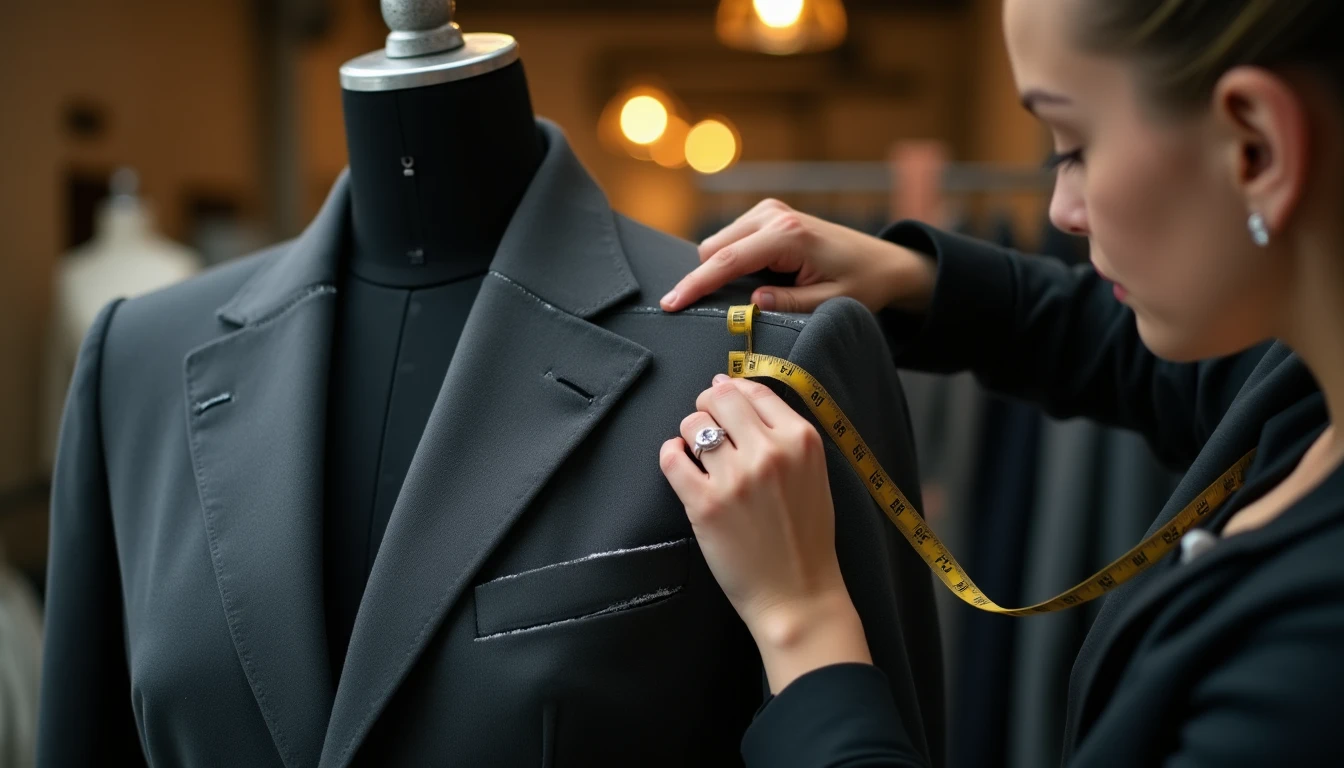
Tailoring is the craft of shaping and fitting a garment to an individual body using darts, seams, pressing, and internal structure, rather than relying on stretch fabric or a loose cut to fit. It’s a different approach from most home sewing patterns, which lean on ease (a bit of built-in room) or stretch knits to fit a range of bodies without much adjustment.
The word covers a few distinct levels of service, and they’re worth telling apart:
- Bespoke. Made entirely from scratch. A unique paper pattern is drafted from the wearer’s own measurements, with no existing block used as a starting point, and it typically takes three to five fittings before the garment is finished. This is the highest level of customization, and the highest cost.
- Made-to-measure. An existing “block” pattern is adjusted to the wearer’s measurements, usually length, waist, chest, and shoulder tweaks, rather than drafted from zero. It usually takes one or two fittings and costs a fraction of bespoke.
- Alterations. Modifying an already finished, constructed garment, taking in, letting out, hemming, or resizing, rather than making a new one from a pattern at all.
What actually makes a garment read as “tailored” is internal structure: canvas or interfacing inside a blazer or jacket that holds its shape, shaped shoulder padding, and seams (princess seams, waist darts) cut to follow the body’s curves rather than hang straight from the shoulders. Strip that structure out and you get a soft, unstructured jacket instead, which is a different garment even if the outer shape looks similar on a hanger.
On ready-to-wear labels, “tailored fit” is its own, narrower claim. It means the garment is cut closer to the body than a relaxed or classic fit, without being as snug as a “slim” or “skinny” fit. It’s a fit description, not a promise that the piece was actually made by a tailor.
For home sewists, tailoring skills are learnable in pieces rather than all at once. Fitting adjustments (a full-bust adjustment or a swayback adjustment, for instance), sewing accurate darts, and pressing for shape (using a tailor’s ham, pressing seams open rather than to one side) are the building blocks toward real tailoring skill. Alterations are a good entry point too, since you’re working with a finished garment instead of a flat pattern; mending and alterations is a practical place to start.
What About the Fabric?
Everything above is really only half the story. A silhouette is an outline, and fabric is what fills it in. The same A-line pattern reads as crisp and structured in a stiff cotton poplin, and soft and fluid in a drapey rayon challis. A wrap dress needs a fabric that actually wraps and clings a little, or the front gapes open. A circle skirt needs weight it can swing with; a cowl neckline needs a fabric that can fold on the bias. Before you commit to yardage for any of the styles above, it’s worth learning the base fabric types and how each one behaves, since the pattern name only tells you half of what the finished garment will actually do.
From Names to Makes
Knowing the vocabulary is the first step. The next is turning a name into a cut list and a set of instructions, which is what the rest of this site is built around: a full garment-sewing roadmap, plus dedicated deep-dives for dresses, skirts, and pants linked above. Tops and shirts get their own detailed walk-through too, covering collars, plackets, and the button-front construction that shirt dresses borrow from; that’s over at sewing tops and shirts. More deep-dives on sleeves, necklines, and fit adjustments are on the way as this hub grows.
Once you know your favorite silhouette, making it is the fun part. Our 155+ printable PDF sewing patterns, with step-by-step instructions, cover a lot of the shapes on this page.
Frequently Asked Questions
What are the main types of dresses?
The core set most stylists and pattern-makers agree on is A-line, wrap, sheath, shift, fit-and-flare, empire waist, bodycon, shirt dress, skater, and mermaid/trumpet, plus length variants (mini, midi, maxi) and historical shapes like drop-waist and ballgown.
How do I choose a dress silhouette?
Start from the silhouette formula, fit level, waist position, and flare, then match it to your body and the occasion. A-line and wrap are the most broadly flattering starting points, but comfort and personal style matter just as much as any rule.
What are the types of skirts?
The main skirt silhouettes are A-line, pencil, circle/full, pleated (knife, box, or accordion), gathered/dirndl, wrap, tulip/bubble, trumpet/mermaid, tiered, asymmetric/high-low, and culottes.
What are the different types of pants called?
Common pant styles include straight leg, slim/skinny, cigarette, boot-cut, flare/bell-bottom, wide leg, palazzo, culottes, cargo, chino, joggers, capri/cropped, and harem, and each also varies by rise (high, mid, or low).
What are the main sleeve types?
The main sleeve types are set-in (the standard), raglan (diagonal seam, easier to sew), dolman/batwing and kimono (both cut-on, no armhole seam), cap, bell, bishop, puff, flutter, three-quarter, and long with a cuff.
What is tailoring?
Tailoring is the craft of shaping and fitting a garment to an individual body through darts, seams, pressing, and internal structure. It’s what turns a flat pattern into a garment that follows a specific person’s shape.
What is the difference between bespoke and made-to-measure?
Bespoke means a garment is drafted from a completely unique pattern made from scratch for one person, with several fittings. Made-to-measure starts from an existing pattern “block” that’s adjusted to the wearer’s measurements, with far fewer fittings and a lower cost.
What is a silhouette in fashion?
A silhouette is the two-dimensional outline a garment makes against the body, its overall shape from a distance, before fabric, color, or trim even come into it, built from fit level, waist position, and flare.