If you have ever stood at your machine wondering what to actually sew, this page is for you. It is the page we wish existed when we started: a simple way to pick a project instead of scrolling forty tabs of ideas that do not fit your afternoon.
A finished project teaches you more than a pile of practice scraps ever will. Every seam you sew for a real purpose, a pouch you will actually use, a gift someone will actually open, sticks in your hands differently than a test swatch does. So instead of asking “what should I practice,” ask three smaller questions: how much time do you have, what is your current skill level, and who or what is this project for. Answer those and the right project practically picks itself.
If you are brand new to a sewing machine, start with our guide to sewing for beginners first, then come back here to pick your first project.
Some links below are affiliate links. Prices are 2025-2026 estimates and change often, so always check current pricing.
Choose by How Much Time You Have
Time is usually the real constraint, more than skill. Here is what fits into the pockets of time you actually have.
Under 30 Minutes
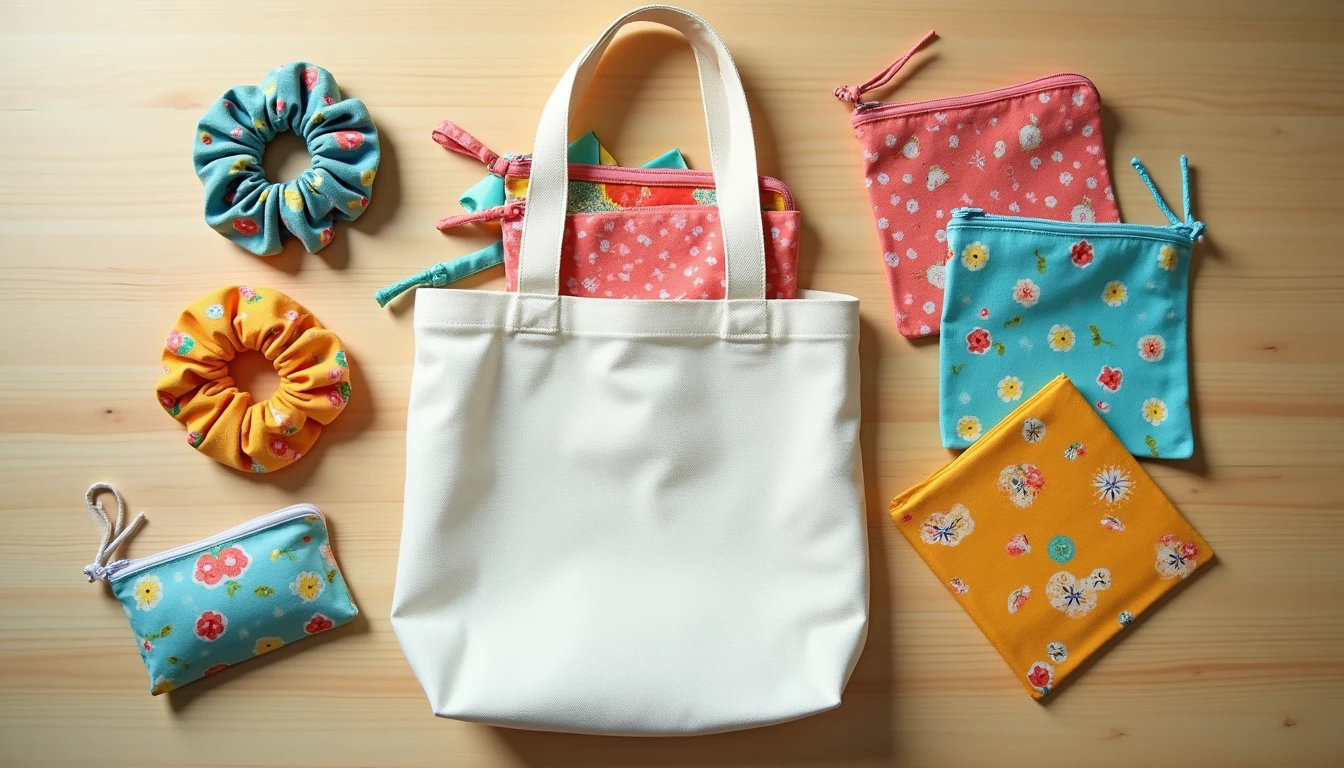
Scrunchie. Two rectangles, one seam, and a channel for elastic. It is done before the kettle boils, and it is the project most people sew first just to prove to themselves they can finish something.
Key fob or wristlet strap. A folded strip of fabric and a hardware ring make the fastest handmade gift you can hand someone. It also gets you comfortable with topstitching and working with interfacing or webbing.
Coaster set. Four small squares of quilted fabric turn into a matching set in one sitting, and they are a forgiving way to practice simple quilting or binding.
Cloth napkins. A hemmed square of cotton, repeated four times, gives you a full set for the table. Straight seams and mitered or folded corners are the only skills involved.
Felt bookmark. Two layers of felt and a blanket stitch finish the whole thing, since felt does not fray and needs no seam finishing at all.
One to Two Hours
Zip pouch. A rectangle, a zipper, and a lining. This is the project that teaches you to install a zipper for good, so it stops feeling scary.
Unlined tote bag. Two panels and two straps, with straight seams only if you skip the lining. Boxed corners and strap placement are the skills you walk away with.
Pillowcase. One yard of fabric with no waste, finished with the classic burrito method so there are no raw edges anywhere inside. It relies on French seams or the burrito roll technique.
Drawstring bag. A tube, a casing, and a cord come together into something useful for laundry, shoes, or gift wrapping. Casings and drawstring channels are skills you will use again later.
Fabric headband. A folded strip with elastic or a knot twist finishes in one sitting and is an easy way to practice elastic insertion or a twist-front construction.
A Weekend
Quilted table runner. Piecing, batting, and quilting lines turn a weekend into a table centerpiece, and you leave with real experience in basic piecing and straight-line quilting.
Bag with hardware and a zipper. Rivets, a magnetic snap, D-rings, and a lined zipper pocket step things up from a basic tote and teach hardware installation and structured bag construction.
Full apron with pockets. Ties, a pocket, and often a curved neckline or ruffle make this a proper weekend build that covers curves, pockets, ties, and closures all in one project.
Batch of bowl cozies. Sewing three or four sizes at once makes a satisfying weekend production line. Just note that these are only microwave safe when sewn entirely from 100% cotton, more on that below.
Pajama pants. An elastic waist and two leg seams make this the first real garment for many sewists, and reading a garment pattern for the first time. If garments are calling to you, our full how to sew clothes guide is the next stop.
Choose by Skill Level
Projects also sort themselves into a natural three-rung ladder. Climb it at your own pace.
Beginner (straight seams only). A pillowcase is the gentlest start, all straight seams, forgiving fabric, no fitting involved. An unlined tote bag adds boxed corners without a zipper. Cloth napkins are pure practice in a consistent seam allowance, and a drawstring bag adds a simple casing on top of straight seams. None of these require a curve, a zipper, or a pattern that has to fit a body.
Confident (zippers, curves, and closures). Once straight seams feel automatic, a zip pouch introduces the zipper itself. An apron adds curves, ties, and pockets. A potholder introduces binding and insulated batting, and a bowl cozy adds curved piecing along with a safe-materials rule you actually need to follow.
Stretch (structure, piecing, and garments). From here, a bag with hardware brings in rivets, snaps, D-rings, and structured construction. A quilted table runner adds piecing and either free-motion or straight-line quilting. Pajama pants or another simple garment bring pattern reading, fit, and garment-specific seams into the mix for the first time.
The 15 Classic Projects Everyone Should Sew
These fifteen show up again and again in sewing rooms for a reason. Each one teaches you something specific, and together they cover almost every basic skill you need.
- Pillowcase. Straight seams and the burrito-roll or French-seam finish that hides every raw edge. It is usually the very first project recommended to new sewists because it uses one yard of fabric with no waste.
- Tote bag. Boxed corners and strap placement, and it produces something you will actually use at the grocery store the same week.
- Zip pouch. How to install a zipper without fear, since a flat pouch is far more forgiving than a garment zipper.
- Scrunchie. Turning a tube right-side out and threading elastic through a channel, all in under 15 minutes.
- Cloth napkins. Even, consistent hems and mitered or folded corners, plus how to batch-cut a set of matching pieces.
- Drawstring bag. Sewing a casing and threading a drawstring, a technique you will meet again later in garment waistbands.
- Apron. Ties, pockets, and often a curved neckline, bridging simple sewing and true garment construction.
- Potholder. Binding an edge and working with insulated batting so the finished piece is actually oven safe, not just decorative. A word of caution here: potholders need an insulated batting like Insul-Bright, which is heat-resistant, not heat-proof, and is only rated safe up to roughly 400 degrees. For anything hotter, double up your potholders. Insul-Bright also contains a metalized polyester film, so it should never go in a microwave. The metal content can spark and start a fire. It is made for oven and stovetop heat only.
- Coasters. Small-scale quilting or simple binding, and a way to get a lot of practice reps out of very little fabric.
- Baby bib. Sewing curves and adding a closure, a snap or a piece of Velcro, on a small, low-stakes piece.
- Infinity scarf. Working with knit or lightweight woven fabric and sewing a continuous loop with a hidden seam.
- Microwave bowl cozy. Curved seams plus a safety rule you cannot skip. A bowl cozy is only microwave safe if every single layer is 100% cotton: the outer fabric, the batting, and even the thread, including the bobbin thread. Polyester or synthetic-blend components in any of those layers can scorch or catch fire. There is a catch worth knowing too: not all cotton batting is microwave safe. Some cotton battings, including Warm & Natural, include a scrim (a thin polyester or polypropylene stabilizer layer) running through the middle, and that scrim makes the batting unsafe for a microwave cozy even though the label says cotton. Pellon’s Wrap-N-Zap is a batting made specifically for this purpose and labeled as microwave safe, which makes it the simpler choice if you are not sure.
- Pencil case. A boxed, zippered pouch at a slightly larger scale than a basic zip pouch, often your first project with a lining.
- Simple fleece or minky blanket. Sewing with pile or plush fabric and finishing a large edge with binding or a blanket-stitch tie method, with no batting or quilting required.
- Pajama pants. Reading a garment pattern, sewing an elastic waist casing, and fitting a garment to a body for the first time.
Projects That Make Great Gifts
The best handmade gift is one matched to the person, not just to what you feel like sewing.
For a teacher, a zip pouch for supplies, a key fob for their lanyard or car keys, or a fabric pencil case all land well and get used daily.
For a hostess, a set of cloth napkins or coasters tied together with ribbon makes a lovely small gift, and a quilted table runner works for a more generous one.
For a new baby or new parents, baby bibs, burp cloths, or a soft minky blanket, all sewn from washable cotton or minky, are practical gifts that see real use.
For the men on your list, a simple apron, a toiletry or dopp-kit style zip pouch, or a fabric koozie or can cooler tend to be the easiest wins.
One honest note on timing: handmade gifts always take longer than store-bought ones. Start well before the occasion, especially for anything with a zipper, hardware, or a pattern you have not sewn before, so there is time to fix mistakes or restart a piece without missing the deadline. If you are planning around a specific holiday, our seasonal and holiday sewing guide has more date-specific ideas and lead times.
Scrap-Busting Projects
Every sewing room ends up with a growing pile of leftover fabric, and a handful of projects exist almost entirely to use it up.
- Key fobs or wristlet straps, since they only need a small strip of fabric.
- Coasters or mug rugs, which turn odd-shaped scraps into a patchwork square.
- Scrunchies, one of the most fabric-efficient projects that exist.
- Patchwork zip pouches, piecing several small scraps into one exterior panel.
- Fabric twine or trim, made by cutting scraps into strips and twisting or braiding them.
- An applique or stash-building bin, sorting keeper scraps by size so future projects are quick to plan.
The organizing tip that saves the most time: sort your scraps by size as you accumulate them, rather than digging through one big bin later. When you already know which drawer holds strips wide enough for a key fob, a scrap-busting project takes minutes to start instead of an hour of hunting. If you want a refresher on which fabrics suit which projects, our sewing fabrics guide breaks down what quilting cotton, minky, and fleece are each best used for.
Where to Go Deeper
This page is meant to be a starting point, not the whole map. Once you know what kind of project you are drawn to, a few deeper guides are worth exploring.
If you keep gravitating toward pillows, table runners, curtains, and other pieces for your living space, our home decor sewing guide is where to go next.
If bags are your thing, whether that is totes, zip pouches, or structured bags with hardware, our dedicated sewing bags guide goes much deeper than the overview above.
If you just want a steady stream of quick, low-commitment wins, our easy sewing projects guide collects the fastest, most forgiving ideas in one place.
And if you are ready to move from small projects into clothing, our how to sew clothes guide walks you through reading a pattern, choosing your first garment, and getting a fit that actually works.
Looking for a project with full instructions already written out, so you are not guessing at seam allowances or cutting sizes? Our pattern library has more than 155 printable PDF sewing patterns covering nearly every project mentioned on this page. Browse the collection at our pattern library and print whichever one matches your afternoon.
Frequently Asked Questions
What are good sewing projects for beginners?
Start with projects made of straight seams only: a pillowcase, an unlined tote bag, cloth napkins, or a drawstring bag. None of these require a zipper, a curve, or a fitted pattern, so a small mistake still results in a usable finished piece.
What can I sew in 30 minutes?
A scrunchie, a key fob, a set of coasters, cloth napkins, or a felt bookmark can all be finished in under 30 minutes, even for a fairly new sewist.
What sewing projects sell well?
Small, fast items tend to sell best at craft fairs and online: scrunchies, zip pouches, bowl cozies, key fobs, and baby items like bibs. They are cheap to produce in batches and shoppers understand their purpose at a glance. The part people underestimate is pricing your time fairly, most sewists find that a batch of fifty pouches takes far more hours than they expected, so it is worth checking your local craft fair’s rules on booth fees, tax collection, and handmade-goods labeling before you commit to a table.
What can I sew with fabric scraps?
Key fobs, coasters, scrunchies, patchwork zip pouches, and fabric twine all use up leftover fabric well. Sorting scraps by size as you go makes it much faster to grab the right piece for your next small project.
What should my first sewing project be?
A pillowcase is the most commonly recommended first project, since it uses one yard of fabric with no waste, involves only straight seams, and finishes with a clean, hidden-edge seam that hides beginner mistakes.
What can I sew as gifts?
Match the project to the person: a zip pouch or key fob for a teacher, napkins or coasters for a hostess, bibs or a soft blanket for a new baby, and an apron or toiletry pouch for the men on your list. Start early, since handmade gifts take longer than expected.
How do I choose a sewing project?
Pick by three factors: how much time you actually have (30 minutes, a couple of hours, or a full weekend), your current skill level (straight seams only, or comfortable with zippers and curves), and your purpose (practice, a gift, or something for your home).
What basic supplies do small projects need?
Fabric scissors, straight pins, a tape measure, all-purpose thread, a seam ripper, and an iron cover the vast majority of small projects. A rotary cutter, cutting mat, and ruler speed things up but are not required to get started.