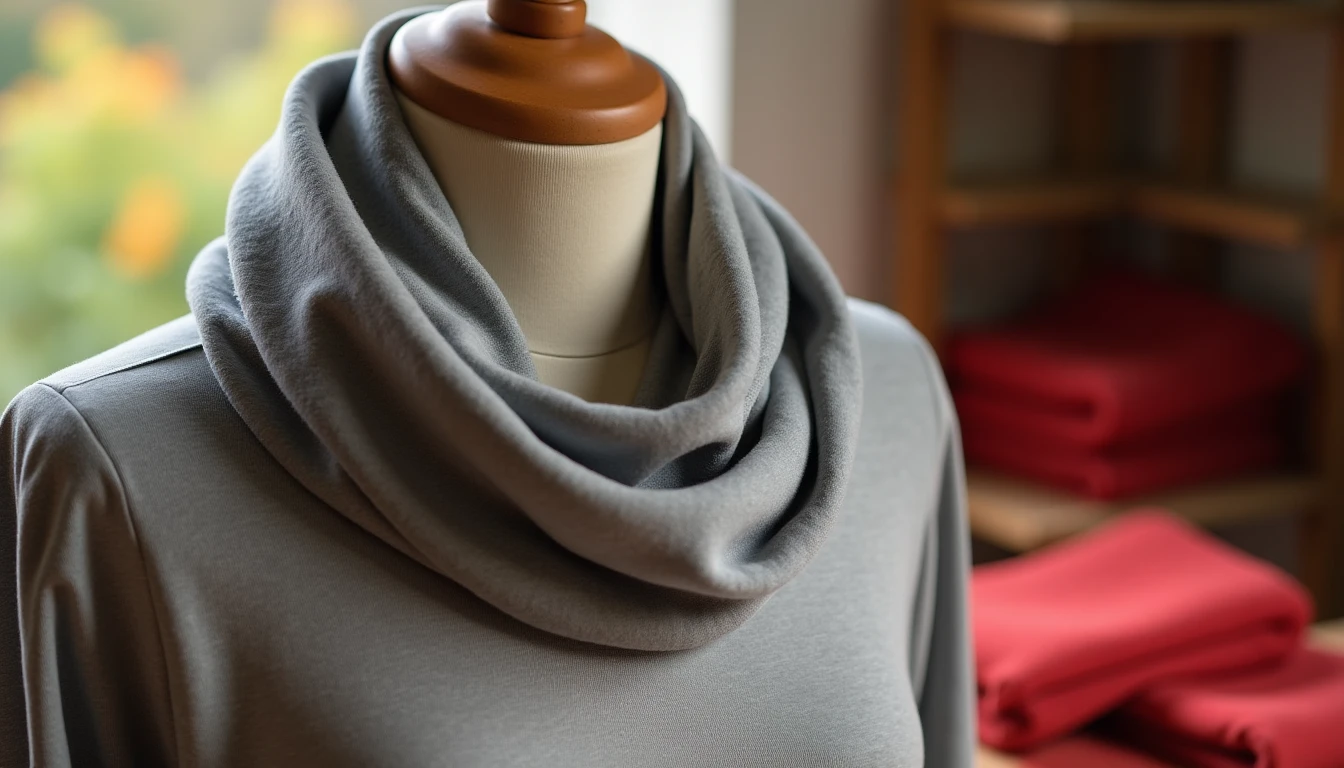
If you need a handmade gift that looks like you spent real money on it, learning how to sew an infinity scarf is the fastest route there. It’s a rectangle of fabric and two seams, no fitting, no zippers. Cut it, sew it, turn it right side out, and you have a scarf that loops over the head with no ends to tie, one of the projects we point beginners to first, alongside our other quick sewing projects.
Some links below are affiliate links. Prices are 2025-2026 estimates and change often, so always check current pricing.
Infinity Scarf, Cowl, Snood: Sorting Out the Names
These words overlap in everyday use, but the sizes differ. A classic infinity scarf wraps twice around the neck: a finished loop of 60 to 70 inches and 10 to 14 inches wide once folded. A cowl is the shorter cousin, one loop close to the neck, finishing around 24 to 30 inches. A snood is cut and worn higher, loose enough to pull over the head like a hood, which neither a cowl nor infinity scarf is built for.
Kids’ versions scale down: a toddler loop runs about 32 to 36 inches, older kids (roughly 4 to 12) do well with 36 to 48 inches, and for them it’s not only about fit (more below).
The Tube-and-Nest Construction
This is the whole pattern, and once you’ve made one you won’t need to look it up again.
- Cut one rectangle to your chosen finished size, plus seam allowance (about 1/2 to 5/8 inch on the long edge and short ends). No pattern pieces needed.
- Fold the rectangle in half lengthwise, right sides together. Sew the long raw edges (straight stitch, or a narrow zigzag for knits) into one long tube open at both short ends.
- Now the trick that makes the seam look deliberate: reach inside the tube and pull one open end through until it comes out the other side, so the two raw-edge openings nest one inside the other, seams lined up, forming a circle without twisting.
- Pin and sew around that joined edge, leaving a 3 to 4 inch gap to turn the work through.
- Pull the scarf right side out through the gap. The tube inverts and the loop pops into its finished shape.
- Close the gap by hand with a ladder stitch, catching the folded edges on each side and pulling the thread snug every few stitches. See our guide to closing a gap with a ladder stitch if you haven’t done one; done well, it disappears into the seam.
Two variations worth knowing: a Moebius scarf gets a half-twist in one tube end before joining it to the other, stitched through all four layers, turning the loop into a true Moebius strip with one continuous edge. A true knit that won’t fray (jersey, sweater knit) can skip the fold-and-tube step entirely, sewing just the two short ends of a single-layer rectangle into a loop with raw top and bottom edges, since knit edges curl in and read as finished.
Fabric Makes or Breaks It
Knits are the classic, forgiving choice. Lightweight jersey drapes beautifully, needs only a zigzag or stretch stitch, and doesn’t fray, which is why it’s the go-to for the no-hem version above. For a woven, flannel is a cozy winter favorite (prewash it, since it shrinks and sheds lint), and double gauze or silky rayon challis gives a lighter, dressier drape.
Skip stiff, heavily-starched quilting cotton and structured wovens like twill, corduroy, or canvas. They hold their shape instead of folding softly, so the scarf sticks out rather than drapes. See our breakdown of fabric types and drape for more on how weights and weaves behave.
Yardage: about 2/3 yard on fabric 58 to 60 inches wide or more, or 1 to 2 yards on standard 44 to 45 inch quilting-weight fabric.
The Fleece Neck Warmer
The fleece neck warmer, sometimes called a fleece cowl or gaiter, is the cold-weather, snug-fit cousin: a short single tube, not doubled, sitting close around the neck.
- Cut one fleece rectangle: about 23 by 8 inches for kids, 25 by 9 for adults (up to 12 to 14 inches tall for a version that covers the chin). A good anti-pill fleece holds up through repeat washing without turning fuzzy.
- Orient the fabric so the greatest stretch runs around the circumference, not top to bottom, or the tube will be too rigid to pull on.
- Sew the short ends together with a zigzag or stretch stitch, using roughly 3/8 to 1/2 inch seam allowance so the seam still gives.
- Leave the top and bottom edges raw. Fleece doesn’t fray, so this is a real finishing choice, not a shortcut.
- For a ski-gaiter variant, add a folded drawstring channel at the top with a cord and cord-lock toggle to cinch it over the nose and chin.
Kids and Safety
This part matters more than the sewing. Long, loose infinity-style scarves are a documented strangulation and choking risk for young children, catching on playground equipment, car doors, and similar hazards, which is why the short, snug fleece neck warmer is generally the better cold-weather choice for kids. Keep it correctly sized, remove it during active play or anywhere it could catch, and supervise in the meantime. Our notes on sewing for kids cover more fit and safety basics.
Upgrades
A plain infinity scarf doesn’t have a pocket by default, but the hidden zipper pocket version is a real, well-documented trend, popular as a travel scarf for hiding a passport, cash, or phone: a small lined pocket with a zipper sewn into the seam allowance of a wider, woven scarf, around 18 to 28 inches wide by 65 to 72 inches long.
Simpler upgrades: color-blocking (piecing fabric strips together before sewing the tube seam), and a reversible two-fabric version using a different fabric for each tube layer, so the scarf shows a different face depending on how you wear it.
The Honest 30 Minutes
The “30-minute infinity scarf” claim is realistic, but it assumes fabric already cut and a machine already set up. The hand-sewn gap closure adds a few minutes that shouldn’t be rushed, so 30 to 45 minutes is a more dependable expectation for a beginner, and it’s still one of the fastest wearable projects in sewing.
It also batches well for gifting: cut several scarves from one yardage and chain-piece the long tube seams (sewing them one after another without cutting the thread between) to save time. At roughly 2/3 to 1 yard per scarf, a handful of handmade gifts costs less than most store-bought options, and looks like it cost more.
Want more ready-to-sew ideas beyond this one? Our printable pattern library has 155-plus PDF sewing patterns you can download and start cutting from tonight.
Frequently Asked Questions
How much fabric do you need for an infinity scarf?
About 2/3 yard on fabric 58 to 60 inches wide or wider, or roughly 1 to 2 yards on standard 44 to 45 inch quilting-weight fabric, depending on the finished length and fullness you want.
What is the best fabric for an infinity scarf?
Jersey and sweater knits work best: they drape well and don’t fray, so edges can be left raw. Flannel, double gauze, and silky rayon work for woven or dressier options. Avoid stiff wovens like quilting cotton, twill, or canvas, which hold their shape instead of draping.
How do you sew the ends of an infinity scarf together?
Pull one open end of the sewn tube through its own interior so both raw-edge openings nest together, seams matched, then stitch around that joined edge, leaving a small gap to turn the scarf right side out. Close the gap with a ladder stitch so it’s invisible.
What size should an infinity scarf be?
For a scarf wrapped twice, aim for 60 to 70 inches around and 10 to 14 inches wide. A single-wrap cowl-style loop runs 24 to 30 inches. Kids’ versions scale down to roughly 32 to 48 inches depending on age, and should stay snug rather than long for safety.
How do you make a fleece neck warmer?
Cut one fleece rectangle (about 23 by 8 inches for kids, 25 by 9 for adults), oriented so the greatest stretch runs around the circumference. Sew the short ends into a loop with a zigzag or stretch stitch, leaving the top and bottom edges raw since fleece won’t fray.
What is the difference between an infinity scarf and a cowl?
Both are closed-loop scarves and the terms overlap, but a cowl is shorter and closer-fitting, while an infinity scarf is longer and cut to be wrapped twice. A snood is a related piece cut and worn higher, often loose enough to pull up over the head like a hood.